Astronomical translation in Abbasid Baghdad
Bringing astronomical knowledge across languages into new scholarly work.
- When
- 8th–9th centuries
- Where
- Baghdad and connected scholarly networks
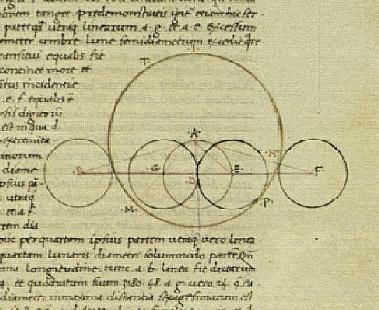
Baghdad became a centre where astronomical knowledge from several traditions was translated and studied. Scholars connected Greek, Persian and Indian materials with research in Arabic, helping sustain and extend mathematical astronomy.
Background
Knowledge crossing borders
Scientific texts travelled through networks of scholars and patrons. Translation required interpretation and technical vocabulary, not simply copying words from one language to another.[1]
What happened
Impact & evidence
Comparing different traditions
Scholars in Baghdad translated Indian astronomical manuals into Arabic, while Greek astronomical works also entered Arabic scholarship. UNESCO traces an Arabic translation of Ptolemy’s Almagest to the ninth century. Bringing these materials into a shared scholarly language made comparison and further investigation possible. Translation was part of active intellectual work, not merely storage of an unchanged ancient inheritance.[1]
Aftermath & legacy
A connected history of science
These exchanges challenge accounts that treat scientific traditions as isolated. The importance lies in transmission and further scholarship, rather than a claim that all activity happened inside one legendary building.[1]
Sources & image credits (1)
Ptolemy; Public domain; via Wikimedia Commons. Image source ↗