The DNA double helix
Explaining how DNA's molecular structure could carry and copy genetic information.
- When
- 1953
- Where
- Cambridge and London, Britain
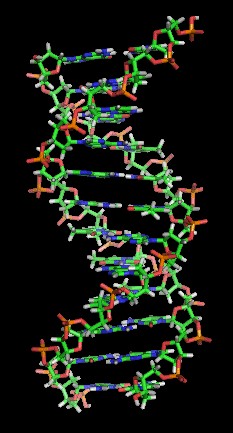
The double-helix model connected the structure of DNA with heredity. James Watson and Francis Crick developed the model using chemical and experimental evidence, including X-ray work by Rosalind Franklin and Maurice Wilkins.
Background
A molecular question
Researchers knew that understanding heredity required explaining the physical organisation of genetic material. Evidence came from several laboratories rather than one isolated experiment.[1]
What happened
Impact & evidence
Evidence behind the model
X-ray diffraction work by Rosalind Franklin and Raymond Gosling helped constrain the possible shape of DNA. The 1953 double-helix model brought experimental evidence together with chemical reasoning about how its components could fit. Complementary base pairing also suggested how genetic information could be copied. Reducing the discovery to a single photograph or a sudden flash of inspiration obscures the experimental work and the question of how unpublished results were shared.[3]
Aftermath & legacy
Credit and discovery
Franklin's experimental contribution is essential to this history. The model became a foundation for molecular biology, while accounts of its discovery continue to examine access to data and recognition.[1]
A structure opened further questions
Knowing DNA’s shape did not by itself explain every step between a gene and an organism’s characteristics. It gave researchers a physical framework for investigating replication and the storage of biological information. Franklin’s contribution has since become central to reassessments of how credit was distributed among the scientists involved.[4]
Sources & image credits (4)
- Nobel Prize — What is life? ↗
- Nobel Prize — Cells, nerves and genes ↗
- nature.com — historical account ↗
- nature.com — historical account ↗
84user adapting file originally uploaded by Richard Wheeler ( Zephyris ) at en.wikipedia; CC BY-SA 3.0; via Wikimedia Commons. Image source ↗