The discovery and development of penicillin
Turning an observation about mould into a treatment for bacterial infection.
- When
- 1928–1945
- Where
- Britain; international production
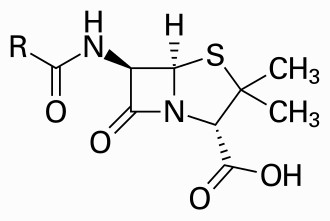
Alexander Fleming observed penicillin's antibacterial effect; Howard Florey, Ernst Chain and their colleagues helped turn it into a usable medicine. Discovery and successful treatment were separate stages, requiring laboratory work and production on a much larger scale.
Background
Before antibiotics
Bacterial infections that are now treatable could be fatal. Finding a substance that inhibited bacteria was only the beginning of making a reliable medicine.[1]
An observation was only the beginning
Fleming’s observation that a mould inhibited bacteria did not immediately produce a medicine that doctors could prescribe. The next challenge was to extract an active substance, establish that it could treat infection inside the body, and manufacture enough without losing its activity. Oxford researchers and industrial producers supplied different parts of that chain. The familiar discovery story therefore spans laboratory observation, experimental treatment and a major engineering effort.[1]
What happened
- 1928
Fleming's observation
A mould contaminating a culture inhibited bacterial growth, prompting Fleming's investigation.[1]
- 1941
Clinical treatment
The Oxford team's work brought penicillin into clinical use.[1]
- 1945
Shared recognition
Fleming, Chain and Florey jointly received the Nobel Prize in medicine.[1]
Impact & evidence
Producing enough to treat patients
Deep-tank fermentation helped turn scarce laboratory penicillin into an industrial product during the Second World War. American Chemical Society accounts describe how production expanded sharply in 1944. The medical advance depended on reliable supply as well as the original discovery: an effective antibiotic could save comparatively few people while each dose remained difficult to make.[3]
Aftermath & legacy
From laboratory to treatment
Penicillin helped establish antibiotics as central to medicine. Its history is also a reminder that scientific credit extends beyond a single discovery moment.[1]
Sources & image credits (3)
Yikrazuul; Public domain; via Wikimedia Commons. Image source ↗