The Western Desert painting movement
Aboriginal artists bringing Country and ancestral knowledge into a major contemporary painting movement.
- When
- From 1971
- Where
- Papunya and the Western Desert, Australia
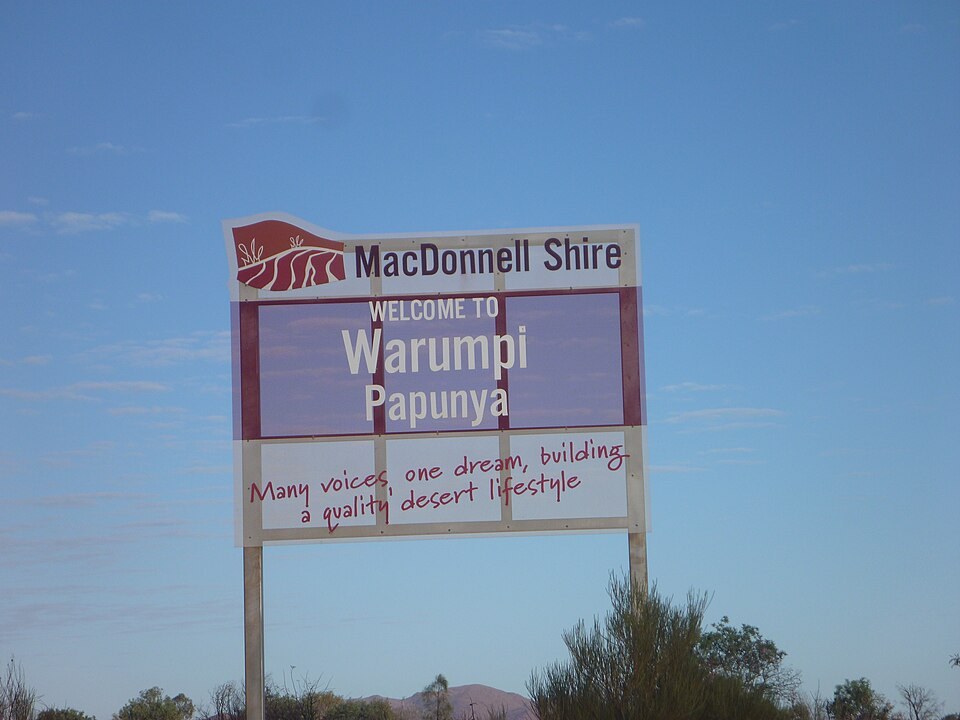
Aboriginal artists bringing Country and ancestral knowledge into a major contemporary painting movement. Papunya brought together Aboriginal people from different language groups, many displaced from traditional lands under assimilation policies. The difficult conditions did not erase existing artistic and ceremonial knowledge.
Background
A settlement far from Country
Papunya brought together Aboriginal people from different language groups, many displaced from traditional lands under assimilation policies. The difficult conditions did not erase existing artistic and ceremonial knowledge. Painting grew from those traditions and from decisions by artists about what could be shown beyond their communities.[1]
What happened
- 1971
Painting at Papunya
Artists began working with acrylic paint on boards, alongside a school mural project associated with teacher Geoffrey Bardon. Kaapa Tjampitjinpa's prize-winning work brought early recognition. Bardon helped with materials and sales, but the knowledge, authority and creative choices belonged to the artists.[1]
- 1972 onward
An artist-owned cooperative
Papunya Tula Artists was established to organise the growing work. Painters developed distinctive visual approaches and markets expanded. The movement later included wider communities and significant work by women, whose opportunities had initially been restricted in the early Papunya setting.[1]
Impact & evidence
Knowledge has boundaries
Describing these paintings simply as dots misses their relationships with places, kinship and ancestral narratives. Some knowledge is restricted. Public interpretation must respect artists' explanations and community authority rather than assume every symbol can be decoded for an outside audience.[2]
Aftermath & legacy
Contemporary art on its own terms
Western Desert painting changed national and international understandings of Aboriginal art. It supported cultural expression and livelihoods while exposing artists to uneven markets and appropriation. Its history is one of innovation within living traditions, not the discovery of a previously absent artistic culture.[1]
Sources & image credits (3)
- Wikipedia — Papunya Tula ↗
- National Museum of Australia — Papunya Tula ↗
- National Museum of Australia — Papunya collection ↗
Owensgranddad · CC BY-SA 3.0 (source record). Resized for display. Image source ↗