Cultural exchange along the Silk Roads
Connecting communities through the movement of goods, beliefs and knowledge.
- When
- Antiquity–early modern period
- Where
- Asia, Africa and Europe
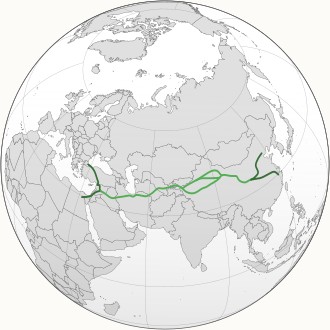
The Silk Roads were changing networks of routes and cities, not one uninterrupted road. Trade brought merchants into contact with scholars, religious communities and craftspeople, making exchange an enduring part of urban life across regions.
Background
Networks rather than a highway
Ports, markets and caravan cities connected local and long-distance journeys. Different routes became important at different times.[1]
Many routes, many intermediaries
The Silk Roads were overlapping connections between settlements and regions, rather than a single road travelled end to end by every merchant. Goods moved through successive hands, carrying opportunities for encounters among languages and beliefs. The network’s cultural importance grew out of repeated contact: exchanges could take place in markets and cities even when the participants never visited one another’s places of origin.[2]
What happened
Impact & evidence
Urban evidence
The histories of centres such as Samarkand and Bukhara preserve evidence of overlapping commercial and intellectual networks.[1]
Aftermath & legacy
Exchange without uniformity
Contact did not erase local cultures or prevent conflict. The routes matter because they reveal how knowledge and practices were adapted through encounters between distinct societies.[1]
Sources & image credits (2)
User:Kelvin Case User:Turkish Flame User:SmallJarsWithGreenLabels; CC BY-SA 4.0; via Wikimedia Commons. Image source ↗