The Gutenberg Bible and European movable-type printing
Demonstrating large-scale book production using movable metal type in Europe.
- When
- c. 1450–1455
- Where
- Mainz, present-day Germany
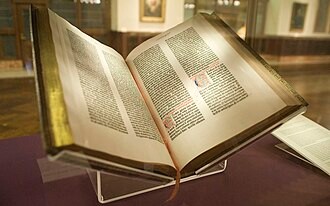
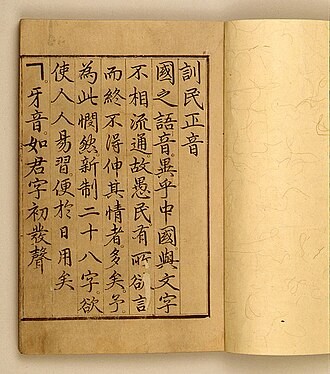
The Gutenberg Bible combined movable type, ink and presswork into an influential European printing achievement. Its importance does not make it the world's first printed book: printing and movable type had earlier histories in East Asia.
Background
Books before this edition
Manuscript copying remained central to European book production. Printing made it possible to produce multiple copies from reusable settings of type.[1]
What happened
Impact & evidence
A reproducible book
Produced in Mainz around 1454–1455, the Gutenberg Bible demonstrated movable metal type on the scale of a substantial book. The Library of Congress estimates a print run of perhaps 180 copies. Each page required type to be arranged, inked and pressed, after which the letters could be reused. Surviving copies also preserve the continuing role of hand decoration: early printing developed within the visual culture of manuscripts.[3]
Aftermath & legacy
Changing access to texts
Printing expanded the possibilities for reproducing knowledge. The Bible represents a European milestone within a wider global history of printing, not an invention without predecessors.[1]
Sources & image credits (3)
- UNESCO — 42-line Gutenberg Bible ↗
- Library of Congress — Gutenberg Bible ↗
- guides.loc.gov — historical account ↗
NYC Wanderer (Kevin Eng); CC BY-SA 2.0; via Wikimedia Commons. Image source ↗