Weimar Constitution
Germany's first parliamentary-democratic constitution combined broad voting rights with powerful presidential emergency provisions.
- When
- 1919
- Where
- Weimar and Germany
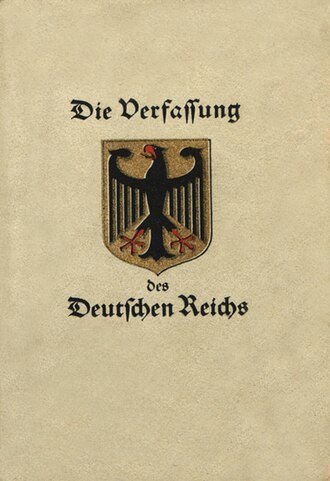
Germany's first parliamentary-democratic constitution combined broad voting rights with powerful presidential emergency provisions.
Background
Republic after war and revolution
The monarchy collapsed at the end of the First World War. A constituent assembly elected by women and men met at Weimar amid political violence and economic strain. The new republic had to establish authority while facing opponents on several sides.[1]
What happened
- 1919
A democratic constitutional framework
The assembly adopted the constitution in July, and it came into force in August. It provided an elected Reichstag, a president and a catalogue of rights. Social provisions and broad participation distinguished it from the earlier imperial order.[2]
Impact & evidence
Parliament and presidency
The president possessed substantial powers, including emergency authority under Article 48. Those provisions interacted with party fragmentation and political choices. The constitution's weaknesses mattered, but its later failure cannot be explained by one article acting independently of the people and institutions that used it.[3]
Aftermath & legacy
Democratic promise and breakdown
The republic experienced cultural and political innovation as well as recurrent crisis. Emergency government increasingly displaced parliamentary bargaining before dictatorship destroyed the democratic order in 1933. The constitutional history concerns how rights and institutions were undermined, not an assumption that their collapse was inevitable from 1919.[1]
Sources & image credits (3)
- Wikipedia — Weimar Constitution ↗
- Bundestag: the Weimar National Assembly ↗
- Bundestag: constitutional comparison ↗
en:User:JonRoma Image source ↗