The Universal Declaration of Human Rights
Setting out a shared international statement of human rights.
- When
- 1948
- Where
- Paris, France; international drafting
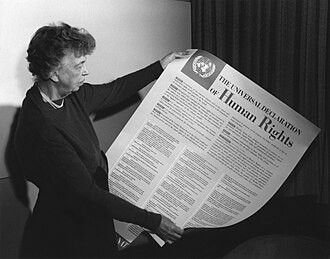
The United Nations General Assembly adopted the Universal Declaration of Human Rights after the Second World War. Representatives from different traditions contributed to a text intended to apply to every person, rather than rights conferred by nationality alone.
Background
After war and atrocity
The UN Charter was followed by work on a statement defining basic rights. Drafting required negotiation across political, legal and cultural differences.[1]
What happened
Impact & evidence
A common standard rather than a world government
The declaration brought civil and political rights together with economic, social and cultural rights. Its adoption established a common statement against which governments could be judged, but did not create a global authority able to enforce every article. Its influence developed through later treaties, constitutions, campaigns and legal argument. The distance between recognition on paper and protection in practice remained central to its history.[1]
Aftermath & legacy
A standard, not automatic protection
The declaration influenced later treaties and constitutional debates. Adoption did not end abuse, and the declaration itself differs from a treaty with binding obligations.[1]
Sources & image credits (1)
FDR Presidential Library & Museum; CC BY 2.0; via Wikimedia Commons. Image source ↗