The Belfast / Good Friday Agreement
Creating a negotiated framework for power-sharing and peace in Northern Ireland.
- When
- 1998
- Where
- Northern Ireland; Britain and Ireland
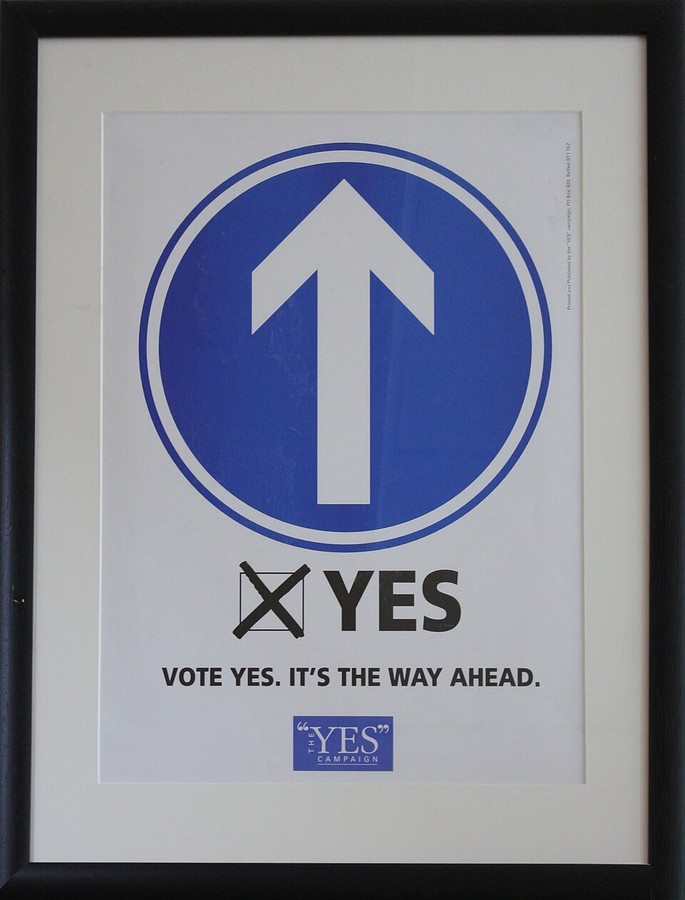
The agreement combined arrangements within Northern Ireland with cooperation across the island of Ireland and between the British and Irish governments. It followed prolonged conflict and negotiations involving multiple political traditions.
Background
A negotiated settlement
Ending violence required addressing constitutional identity, representation and relationships across borders. Agreement depended on institutions that could accommodate continuing differences.[1]
What happened
Impact & evidence
Several relationships addressed together
The 1998 settlement linked government within Northern Ireland with cooperation across the Irish border and between Britain and Ireland. Power sharing and the principle of consent were intended to give competing political traditions a place within the settlement. Rights, policing, prisoners and weapons were also part of the transition. Signing the agreement began a difficult implementation process whose success depended on institutions and continued cooperation.[1]
Aftermath & legacy
A framework to maintain
The agreement became central to the peace process. Its importance lies in sustaining ways of managing disagreement, not in a claim that all tensions or violence immediately disappeared.[1]
Sources & image credits (1)
Ardfern; CC BY-SA 3.0; via Wikimedia Commons. Image source ↗