The making of India's Constitution
Establishing the constitutional framework of an independent republic.
- When
- 1946–1950
- Where
- India
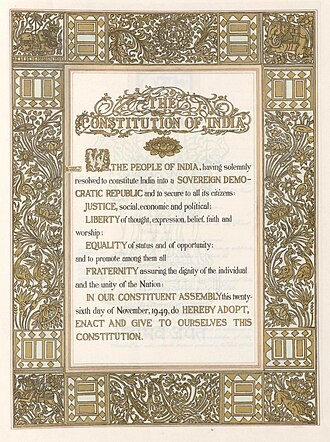
India's Constituent Assembly debated and adopted a constitution during the transition from colonial rule. Its work addressed institutions, citizenship and rights in a country facing the upheavals of independence and Partition.
Background
Debate amid transition
The Assembly began work before independence. Constitution-making continued as political boundaries changed and the new state confronted displacement and violence.[1]
What happened
Impact & evidence
From argument to institutions
The Constituent Assembly had to turn independence into rules for governing a diverse country. Its debates addressed fundamental rights, representation, the distribution of power and social inequality. Adoption on 26 November 1949 preceded the Constitution’s main commencement on 26 January 1950. The text established institutions through which political disagreements would continue; it did not imply that the social problems debated by its authors had already been solved.[1]
Aftermath & legacy
An enduring framework
The Constitution provided the basis for republican government and rights claims. Its subsequent interpretation and amendment are part of its history, rather than evidence that the founding text resolved every dispute.[1]
Sources & image credits (2)
- Constitution of India archive — Stages of constitution-making ↗
- Constitution of India — Commencement ↗
Illumination/ornamentation by Beohar Rammanohar Sinha, calligraphy by Prem Behari Narain Raizada.; Public domain; via Wikimedia Commons. Image source ↗