United States Constitution drafting
A federal constitution replaced the Articles of Confederation while protecting major inequalities.
- When
- 1787–1789
- Where
- Philadelphia and the United States
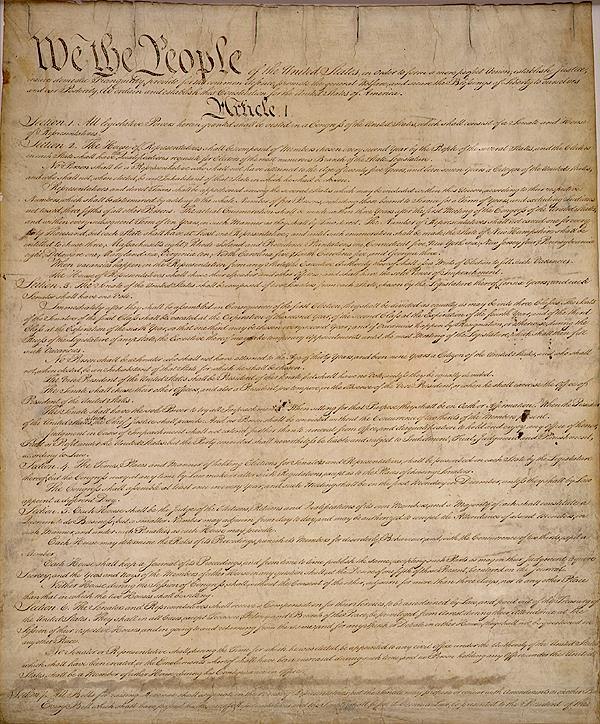
A federal constitution replaced the Articles of Confederation while protecting major inequalities.
Background
A government judged too weak
Disputes over revenue, interstate relations and the powers of the Confederation helped bring delegates to Philadelphia. The convention moved beyond revising the existing arrangement and proposed a new federal structure with separate legislative, executive and judicial branches.[2]
What happened
- 17 September 1787
A proposal required ratification
Delegates signed the Constitution, but signatures did not themselves put it into operation. State ratifying conventions debated the transfer of power and the absence of an explicit bill of rights. The new government began operating in 1789.[3]
- 1787–1788
Drafting was followed by ratification
The Philadelphia convention’s completed text still needed approval through state conventions. Supporters and critics argued over federal power, representation and the absence of an explicit bill of rights. Ratification was therefore a political struggle after the drafting stage, rather than an automatic consequence of the delegates signing the document.[2]
Impact & evidence
Representation and slavery
Compromises over representation and slavery made agreement possible while reinforcing enslavers' political power. The three-fifths provision counted enslaved people for representation without granting them political rights. A constitutional founding was therefore also an accommodation with human bondage.[2]
Aftermath & legacy
Amendment and continuing contest
The Bill of Rights followed in 1791. Later amendments transformed citizenship, slavery and voting rules. The Constitution's durability rests partly on that capacity for amendment and contested interpretation; the original settlement excluded much of the population from political participation.[3]
Sources & image credits (3)
- Wikipedia — Constitutional Convention (United States) ↗
- US National Archives: how the Constitution happened ↗
- US National Archives: Constitution of 1787 ↗
Constitutional Convention · Public domain Image source ↗