Tiananmen Square crackdown
Chinese troops killed hundreds, possibly thousands, while suppressing protests for political accountability and reform.
- When
- April–June 1989 and subsequent repression
- Where
- Beijing and other Chinese cities
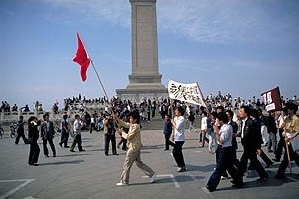
Chinese troops killed hundreds, possibly thousands, while suppressing protests for political accountability and reform.
Background
More than a student movement
Mourning for reformist leader Hu Yaobang developed into demonstrations against corruption and for political freedoms. Students became prominent organisers, but workers and other residents also participated. Their demands were not identical, and the movement extended beyond the famous square in Beijing.[2]
What happened
- May 1989
Martial law and confrontation
Hunger strikes and large gatherings increased pressure on the leadership. Martial law was declared, and residents initially blocked military advances. Divisions within the leadership ended with a decision to use force rather than negotiate a political resolution.[1]
- 3–4 June
Troops fired through Beijing
Soldiers advancing toward Tiananmen Square shot civilians along approach roads and in surrounding neighbourhoods. Many killings occurred outside the square itself. Some civilians also attacked soldiers, but that does not justify the indiscriminate or unlawful killing of protesters and bystanders.[2]
Impact & evidence
Hundreds, possibly thousands
The death toll remains unresolved because no transparent, comprehensive public accounting has been permitted. Human Rights Watch describes hundreds or possibly thousands killed. Presenting a precise number as established would conceal the uncertainty; describing the event only as a clearance of the square would conceal its geographical extent.[2]
Aftermath & legacy
Punishment and the struggle to remember
Arrests and unfair trials followed the crackdown. Amnesty's 1999 report documented people still imprisoned a decade later, including those punished for peaceful activity. Relatives and the Tiananmen Mothers sought names, circumstances of death and accountability while public commemoration and discussion faced continuing suppression.[3]
Sources & image credits (3)
- Wikipedia — 1989 Tiananmen Square protests and massacre ↗
- Human Rights Watch: Tiananmen injustice, thirty years on ↗
- Amnesty International: forgotten prisoners, 1999 ↗
Jiří Tondl ( Blow up ) Image source ↗