California genocide
State-supported violence and coercive labour directed against California's Native peoples.
- When
- Mid-19th century
- Where
- California, United States
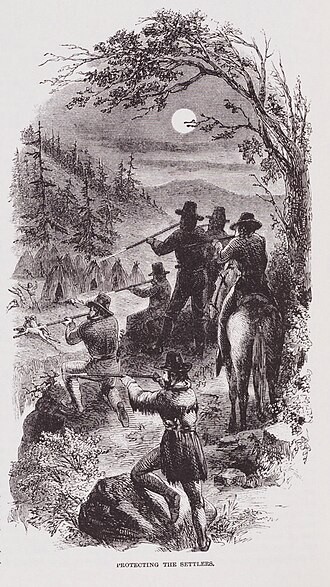
The establishment of US rule and mass settlement brought organised violence, dispossession and exploitation to California's Indigenous nations. State authorities encouraged campaigns against Native communities, while legislation enabled forced service and the separation of children from families.
Background
Many peoples, not one community
California's Native peoples belonged to distinct nations and communities. Policies directed against them attacked landholding, family life and cultural continuity across those differences.[1]
Law made exploitation enforceable
The 1850 law did more than tolerate private abuse. Indenture provisions created mechanisms through which Indigenous labour and children could be placed under others’ control. Read alongside militia campaigns, it shows that dispossession worked through courts and legislation as well as direct violence.[2]
What happened
- 1850
Protection in name
The Act for the Government and Protection of Indians provided mechanisms for indenturing Indigenous adults and children. Its title concealed provisions that facilitated coercion and family separation.[2]
- 1850s
Campaigns against Native peoples
California's own 2019 acknowledgment records governors calling for private and militia campaigns. Violence therefore involved public authority as well as settlers acting individually.[1]
- 2019
A formal state apology
Governor Gavin Newsom apologised for the state's historical violence and mistreatment and established a Truth and Healing Council to include Native perspectives in the historical record.[1]
Impact & evidence
The law as evidence
The legislation is a direct record of state power. California Research Bureau material describes its effects on forced labour, removal and the separation of generations from language and culture.[2]
Why genocide
Historian Benjamin Madley identifies organised, deliberate killing within the wider population catastrophe. The term describes destructive policies and campaigns, while survival and resistance remain part of the same history.[4]
Aftermath & legacy
Survival and historical authority
Acknowledging genocide must also recognise Native survival. The Truth and Healing Council was established to give communities a role in explaining their own histories rather than having the state speak alone.[1]
Acknowledgment built around Native testimony
California’s 2019 apology accompanied the creation of a Truth and Healing Council. The council’s purpose was to incorporate Native perspectives into a record long shaped by those who exercised power. Recognition does not restore lost lives or land; it changes the state’s public account of violence that earlier administrations had enabled.[1]
Sources & image credits (4)
- Governor of California — Apology and Truth and Healing Council, 2019 ↗
- California courts — Research Bureau materials on the 1850 Act ↗
- Library of Congress — Original 1850 Act ↗
- Benjamin Madley — Confronting American genocide on the California coast ↗
John Ross Browne (Life time: 1821-1875); Public domain; via Wikimedia Commons. Image source ↗