Sétif, Guelma and Kherrata massacres
Mass repression of Algerians as Europe celebrated the defeat of Nazi Germany.
- When
- May–June 1945
- Where
- French Algeria
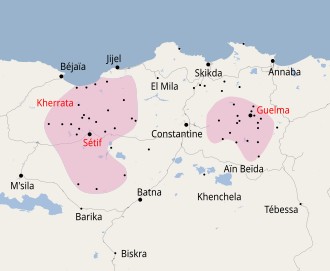
Demonstrations on 8 May 1945 combined victory celebrations with demands for freedom from French rule. Violence against demonstrators and subsequent attacks on Europeans were followed by extensive colonial repression. Thousands of Algerians were killed over the following weeks.
Background
Freedom promised, colonial rule retained
Algerian participation in the war did not bring equal political rights or independence. Demonstrators used the moment of Allied victory to renew anti-colonial demands.[1]
Victory celebrations and unequal citizenship
The end of the European war supplied the immediate occasion for demonstrations, but colonial inequality supplied the grievance. The movements for independence interpreted wartime language about freedom against their own exclusion from political power. French authorities and settlers treated the challenge as a threat to the colonial order.[2]
What happened
- 8 May 1945
Demonstrations and violence
Crowds gathered in Sétif and other towns. Police fire and anti-French violence were followed by a much wider campaign against Algerian communities.[1]
- May–June 1945
Collective repression
French forces and settler militias took part in killings. The repression lasted weeks, extending beyond the original demonstrations to surrounding communities.[2]
- After 1945
A lasting rupture
The events became a central grievance in the history of Algerian independence. Their remembrance highlights the contradiction between European liberation and continued colonial domination.[2]
Impact & evidence
Different casualty estimates
Algerian and French official accounts have presented sharply different totals. The defensible common ground is the killing of thousands; a precise combined total cannot be established from those competing figures alone.[1]
Aftermath & legacy
Three places, distinct histories
Including Guelma and Kherrata in the title recognises that this was not a single incident in Sétif. Commemoration and research must account for local patterns of killing and repression.[2]
Why the numbers remain contested
Repression spread across different towns and rural districts, and records did not establish a complete list of those killed. A figure for Guelma alone is not a total for Sétif, Guelma and Kherrata together. Competing official narratives have also shaped remembrance. The uncertainty over an aggregate must not obscure the documented scale of killings or the roles of security forces and settler militias.[2]
Sources & image credits (2)
- Associated Press — Algeria and the parallel legacy of V-E Day ↗
- French National Assembly — Resolution proposal concerning 8 May 1945 ↗
Houmouvazine; CC BY-SA 4.0; via Wikimedia Commons. Image source ↗