Srebrenica genocide
The systematic killing of Bosniak men and boys after the fall of a UN-declared safe area.
- When
- July 1995
- Where
- Eastern Bosnia and Herzegovina
The systematic killing of Bosniak men and boys after the fall of a UN-declared safe area. Srebrenica held a large displaced Bosniak population during the Bosnian War. The United Nations had declared it a safe area, but its protection was inadequate.
Background
An enclave under siege
Srebrenica held a large displaced Bosniak population during the Bosnian War. The United Nations had declared it a safe area, but its protection was inadequate. Bosnian Serb forces surrounded the enclave, and the small Dutch peacekeeping contingent could not prevent its capture.[1]
What happened
- 11 July 1995
The enclave falls
Forces commanded by Ratko Mladić took Srebrenica. Civilians sought refuge around the UN compound at Potočari, while a column of men and boys attempted to reach government-held territory through the forests. People were separated, captured or detained at several locations.[1]
- July 1995
Executions and forced removal
Bosnian Serb military and police units organised executions of prisoners at multiple sites. Women, children and older people were forcibly transported out of the area. Later movement of bodies into secondary graves complicated identification and helped conceal the scale and organisation of the killings.[1]
Impact & evidence
Evidence recovered from graves and records
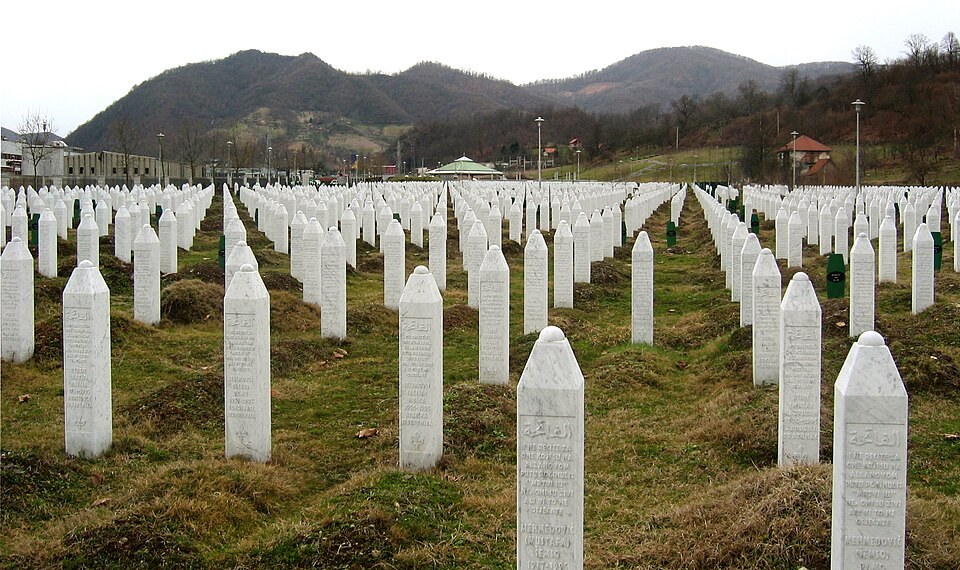
The commonly cited total exceeds 8,000 Bosniak men and boys. Tribunal findings, forensic investigations, intercepted communications and witness testimony established the organised nature of the operation. DNA identification has allowed many families to recover named relatives; fragments from one person sometimes appeared in different graves after reburial.[2]
Aftermath & legacy
Genocide established in court
International judgments recognised the killings as genocide and convicted senior political and military figures for their roles. Commemoration and identification continued long after the war ended. The case also exposed the failure of international protection: designating an area safe did not supply the military capacity or political resolve needed to make that promise effective.[1]
Sources & image credits (2)
- Wikipedia — Srebrenica massacre ↗
- UN International Residual Mechanism — Srebrenica remembrance and evidence ↗
Michael Büker · CC BY-SA 3.0 (source record). Resized for display. Image source ↗