Mexican muralism after the revolution
Turning public walls into arguments about revolution, labour and Mexico's history.
- When
- From the 1920s
- Where
- Mexico
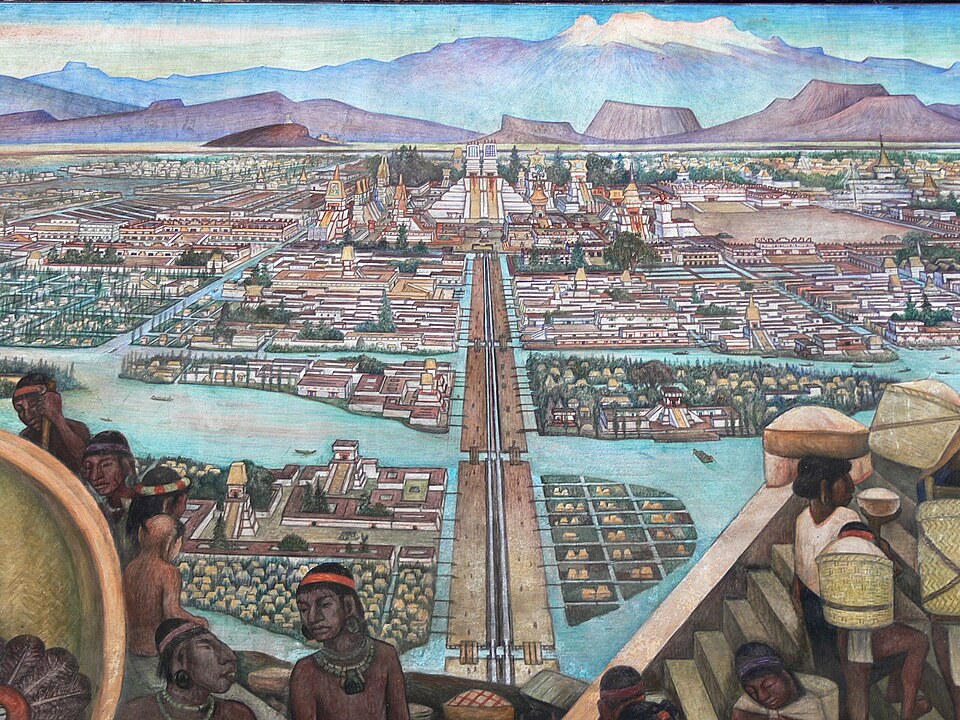
Turning public walls into arguments about revolution, labour and Mexico's history. After the Mexican Revolution, the government supported public art as part of a wider educational project. Murals could reach viewers beyond galleries and book readers.
Background
Rebuilding a national story
After the Mexican Revolution, the government supported public art as part of a wider educational project. Murals could reach viewers beyond galleries and book readers. Schools and government buildings became places where artists represented Indigenous histories, conquest, workers and the promises of the new political order.[1]
What happened
- Early 1920s
Public commissions begin
Education minister José Vasconcelos invited artists to work on monumental walls. Diego Rivera, José Clemente Orozco and David Alfaro Siqueiros became the movement's best-known figures. Their techniques and political interpretations differed: muralism was not a single agreed account of the revolution.[1]
- 1920s onward
Images become public disputes
Artists used fresco and other methods to create ambitious historical cycles. State sponsorship gave access to prominent buildings, while radical imagery could challenge wealthy patrons and official narratives. Women also contributed, despite their exclusion from many accounts centred on the three celebrated men.[1]
Impact & evidence
Public access carried political choices
The murals expanded the visibility of working people and Indigenous subjects within national art. Yet representing a population did not necessarily give that population control over its image. Government display could absorb revolutionary art into an official account of national unity.[2]
Aftermath & legacy
An influence across borders
Mexican muralists worked internationally and influenced public art and later Chicano mural movements. Their legacy includes both a practical model of large-scale painting and a continuing question: who chooses the history displayed on a shared wall, and whose experiences remain outside the frame?[1]
Sources & image credits (2)
Diego Rivera · Public domain (source record). Resized for display. Image source ↗