Sharpeville massacre
Police killing demonstrators protesting apartheid's pass laws.
- When
- 21 March 1960
- Where
- Sharpeville, South Africa
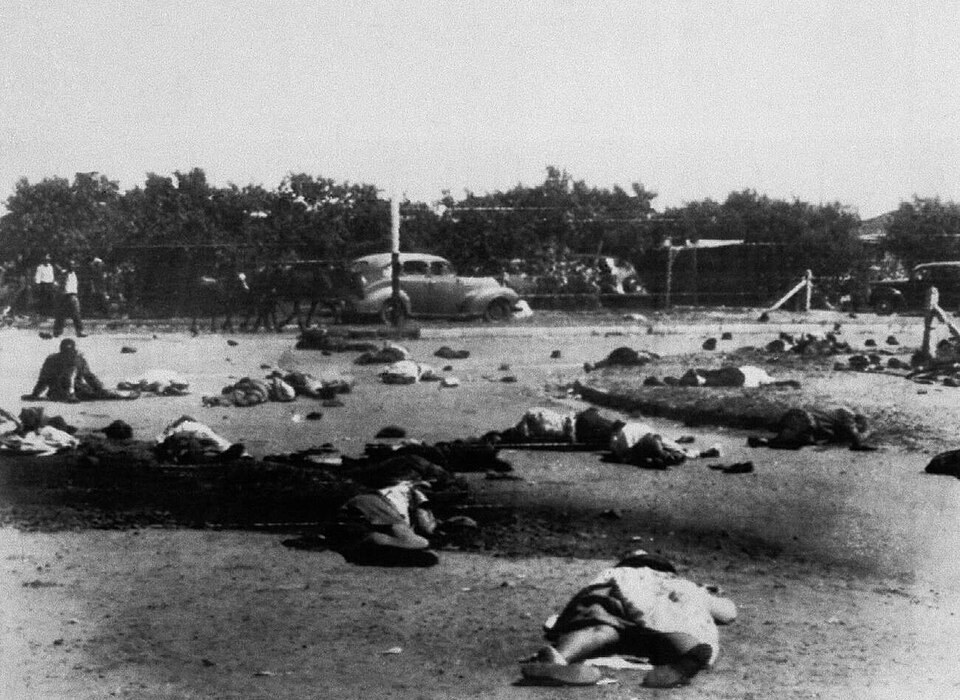
Police killing demonstrators protesting apartheid's pass laws. Apartheid legislation required Black South Africans to carry documents regulating where they could live and work. Police enforcement made movement and employment subject to arrest and coercion.
Background
Pass laws controlled everyday movement
Apartheid legislation required Black South Africans to carry documents regulating where they could live and work. Police enforcement made movement and employment subject to arrest and coercion. The Pan Africanist Congress organised a protest in which participants would present themselves without passes and invite arrest, challenging the system through collective refusal.[1]
What happened
- 21 March 1960
A crowd gathers at the police station
Thousands assembled near the Sharpeville police station. Police reinforced their positions as the crowd grew. The encounter ended with police firing into the demonstrators, including people trying to escape, rather than processing the protest as a mass act of civil disobedience.[1]
- March 1960
Protests and state repression
News of the killings spread and demonstrations followed elsewhere. The government declared a state of emergency, detained opponents and banned the PAC and African National Congress. The response widened political repression instead of addressing the pass-law grievance that had brought people to the station.[1]
Impact & evidence
Evidence of flight
South African History Online records 69 deaths and approximately 180 seriously wounded people according to the inquest. Many victims were shot from behind. The casualty pattern became central to challenging claims that lethal firing was a necessary response to an imminent threat.[2]
Aftermath & legacy
A turning point in resistance
Sharpeville intensified international criticism of apartheid and contributed to major changes in opposition strategy. The date became South Africa's Human Rights Day and an international day against racial discrimination. Remembrance connects the deaths to the administrative system the protesters opposed: routine restrictions on Black people's freedom backed by state force.[1]
Sources & image credits (2)
Photographer unidentified · Public domain (source record). Resized for display. Image source ↗