Shanghai massacre
Chiang Kai-shek's allies attacked organised labour and Communists, rupturing the Nationalist–Communist alliance.
- When
- April 1927
- Where
- Shanghai, China
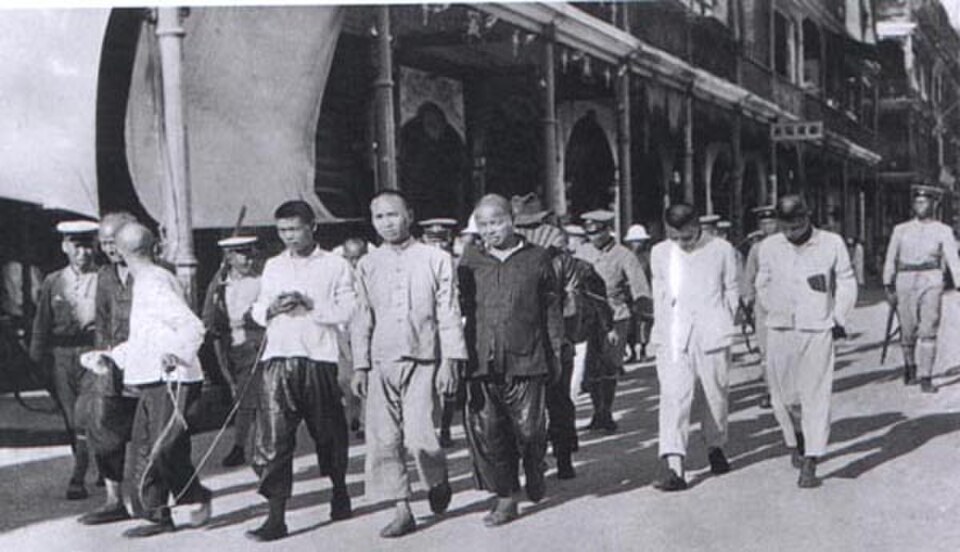
Chiang Kai-shek's allies attacked organised labour and Communists, rupturing the Nationalist–Communist alliance.
Background
An alliance fractured by social conflict
The Northern Expedition brought Nationalist forces toward Shanghai while Communist organisers helped build powerful labour networks. Workers' mobilisation threatened commercial interests and alarmed conservative Nationalists. Cooperation against regional warlords did not remove the incompatible interests within the First United Front.[1]
What happened
- 12 April 1927
Union organisations attacked
Green Gang members and forces aligned with Chiang Kai-shek attacked and disarmed workers' organisations. Nationalist troops consolidated control. Subsequent protests were met with gunfire, arrests and executions, turning political disagreement within the alliance into organised repression.[1]
Impact & evidence
The role of organised crime
Brian Martin's research traces how Green Gang leaders supported Chiang's anti-Communist coup while pursuing their own interests. Their involvement was not an incidental street disturbance: links between political authority, commercial influence and organised crime helped make the purge possible.[2]
A local massacre within a wider purge
Hundreds were killed in the immediate Shanghai violence, while arrests, disappearances and executions continued. Published totals often cover different periods or the wider national purge. Those figures should not be combined into a falsely exact count for 12 April alone.[1]
Aftermath & legacy
An alliance destroyed
The purge helped end Nationalist–Communist cooperation and accelerated civil war. It also devastated independent labour organisation in Shanghai. Later party histories turned the event into a defining political symbol; the workers killed, imprisoned or driven underground remain central to the account rather than merely a backdrop to party leadership struggles.[1]
Sources & image credits (2)
- Wikipedia — Shanghai massacre ↗
- Brian G. Martin: The Green Gang in Shanghai, Australian National University ↗
Unknown author Image source ↗