Sand Creek massacre
A US military attack on a Cheyenne and Arapaho camp seeking peace.
- When
- 29 November 1864
- Where
- Colorado Territory, United States
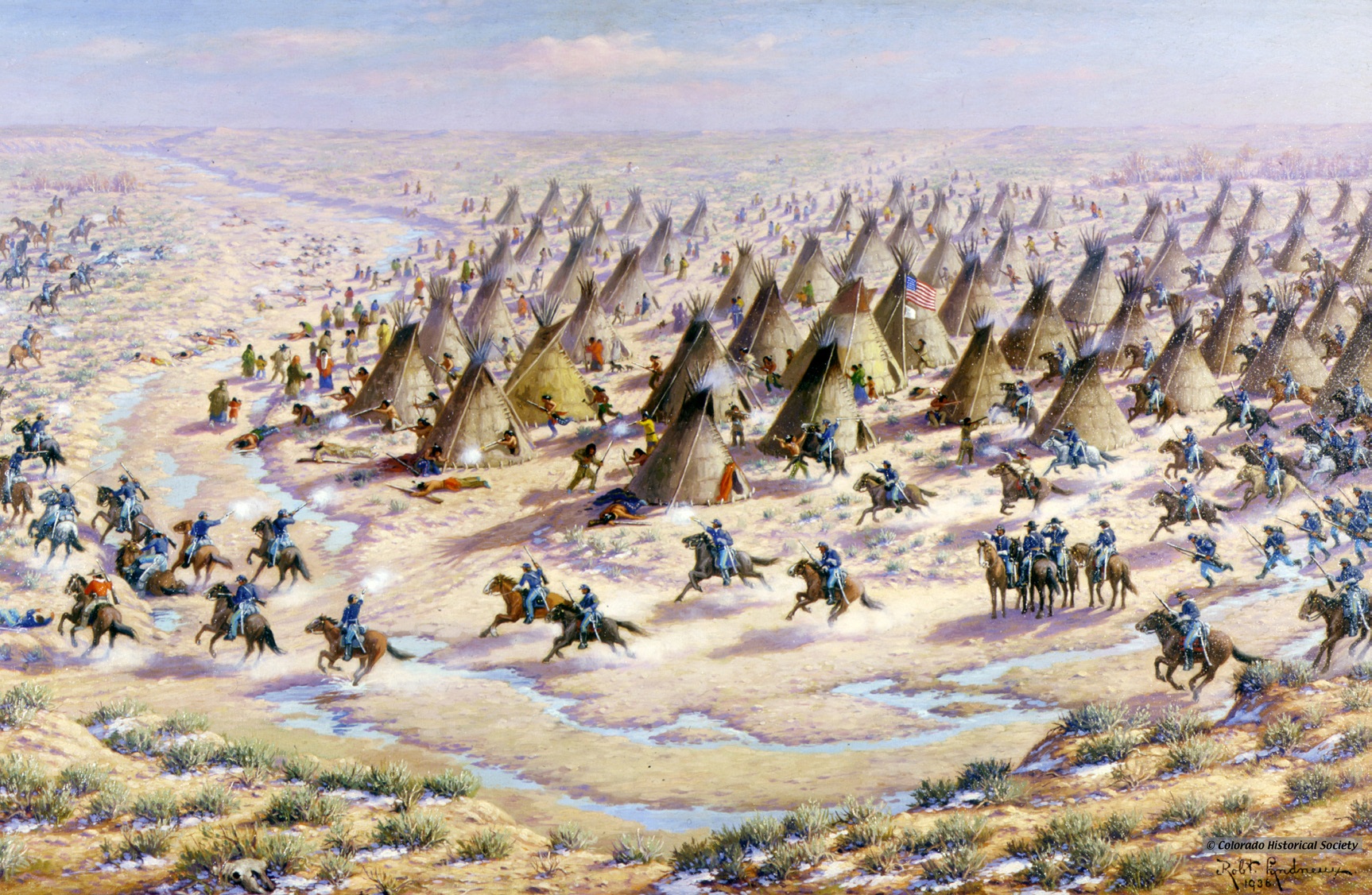
Colorado volunteer troops under Colonel John Chivington attacked Cheyenne and Arapaho people at Sand Creek. Around 230 people were killed, many of them women, children and older people. The attack shattered efforts to secure peace and protection.
Background
Negotiations and insecurity
Black Kettle and other leaders sought peace amid settler expansion and shrinking hunting grounds. The camp was established near Fort Lyon following contacts with US military authorities.[1]
What happened
- Summer–autumn 1864
Conflicting assurances
Governor John Evans directed people he called friendly to seek safety near military posts. Black Kettle negotiated with Major Edward Wynkoop, but these contacts did not secure protection.[1]
- 29 November 1864
The attack
Chivington led approximately 675 soldiers against the camp. People fled along the creek bed and attempted to shelter in its banks while soldiers pursued them.[2]
- After the attack
Evidence survives
Letters by Silas Soule and Joseph Cramer recorded what they witnessed and the refusal of some soldiers to participate. Those accounts stand alongside the history preserved by affected communities.[1]
Impact & evidence
A national historic site
The national historic site was established to preserve the landscape and deepen public understanding of the massacre. It recognises the event as an attack on people, rather than a military victory.[3]
Approximately 230 people killed
The National Park Service’s site history estimates around 230 Cheyenne and Arapaho deaths, mostly women, children and elderly people. Victims were attacked in the village and while trying to escape along the creek. This was the destruction of a community that had sought protection, not an evenly matched engagement between armies.[1]
Aftermath & legacy
A living memory
Sand Creek remains part of Cheyenne and Arapaho community history. Remembering the victims also means recognising the loss of leaders, family members and relationships whose consequences continued beyond the day itself.[1]
Witnesses challenged the victory narrative
Officers who refused to join the attack supplied testimony that contradicted its presentation as a legitimate military success. Survivor accounts and the landscape preserve another essential perspective: where families sheltered, fled and died. Reading both kinds of evidence makes the difference between the attackers’ justification and the experience of those attacked visible.[1]
Sources & image credits (3)
- National Park Service — Sand Creek history and culture ↗
- National Park Service — Site account ↗
- National Park Service — Massacre overview ↗
Robert Lindneaux; History Colorado H.6130.37, via National Park Service. Image source ↗