Potosí silver mining and the colonial mita
A colonial labour draft that supplied workers to one of the world's largest silver-mining centres.
- When
- 16th–18th centuries
- Where
- Potosí, present-day Bolivia
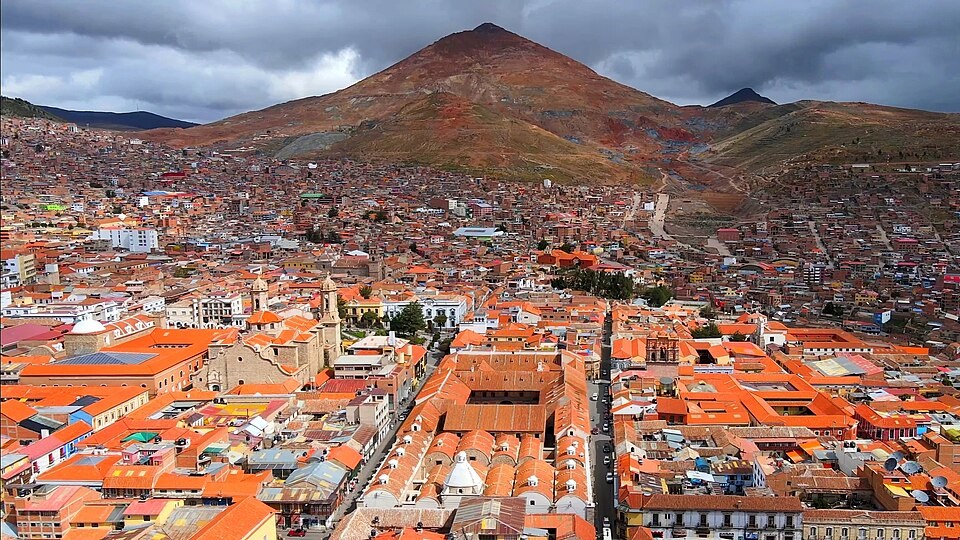
A colonial labour draft that supplied workers to one of the world's largest silver-mining centres. Large-scale mining at Cerro Rico developed after the Spanish discovery of its silver deposits in 1545. The city of Potosí became a centre of extraction linked to Atlantic and Pacific trade.
Background
Silver and an imperial economy
Large-scale mining at Cerro Rico developed after the Spanish discovery of its silver deposits in 1545. The city of Potosí became a centre of extraction linked to Atlantic and Pacific trade. Mining required labour, water, fuel and refining materials on a scale that transformed the surrounding Andean economy.[1]
What happened
- 1570s
Toledo reorganises the labour draft
Viceroy Francisco de Toledo adapted the Andean rotating labour obligation into a colonial system that compelled Indigenous communities to provide workers. Men travelled to Potosí for assigned service, often accompanied by relatives whose work helped support them. The colonial mita served mining revenue rather than the reciprocal obligations claimed by earlier Andean rulers.[1]
- Colonial period
Work beneath the mountain
Drafted labour operated alongside wage labour and other arrangements. Dangerous underground work, exhausting conditions and inadequate returns burdened workers and their home communities. Meeting quotas could require migration, payments or substitutes, so the effects extended beyond the individuals physically working in the mines.[1]
Impact & evidence
No reliable cumulative death register
Silver helped finance empire and international commerce. Communities supplying labour bore costs that did not appear in silver-output figures: absence from farming, family disruption, injury and disease. Frequently repeated enormous lifetime death totals for Cerro Rico require caution because the records do not support a complete count across several centuries.[2]
Aftermath & legacy
Distinguishing systems and periods
Potosí's history includes Indigenous expertise and negotiation as well as compulsion. Its colonial mita should not be equated with every earlier Andean labour obligation or every later form of mining. This distinction makes it possible to identify how colonial authorities redirected labour and who benefited from the resulting wealth.[1]
Sources & image credits (2)
Parallelepiped09 · CC BY-SA 4.0 (source record). Resized for display. Image source ↗