Piper Alpha oil-platform disaster
Explosions and fire destroyed Piper Alpha, killing 167 people and exposing major failures in offshore safety management.
- When
- 6 July 1988
- Where
- North Sea, United Kingdom
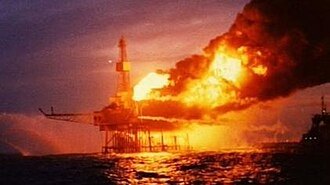
Explosions and fire destroyed Piper Alpha, killing 167 people and exposing major failures in offshore safety management.
Background
An interconnected production system
Piper Alpha operated within an offshore network carrying hydrocarbons between facilities. Maintenance arrangements, communication and emergency isolation were critical because a local failure could escalate while connected systems continued feeding fuel.[1]
What happened
- 6 July 1988
Maintenance failures and escalating fire
Cullen concluded that personnel tried to restart a condensate pump without knowing its safety valve had been removed for maintenance. A temporary flange leaked. Failed shift communication and permit-to-work arrangements allowed the danger to go unrecognised. The first explosion occurred around 22:00; later pipeline ruptures intensified the fire. The inquiry found that earlier shutdown of connected platforms could probably have delayed escalation.[3]
Impact & evidence
Workers and rescuers
The death toll was 167: 165 men from the platform and two rescuers. This distinction matters when comparing the total with the number originally aboard. Survivors and bereaved families faced consequences extending well beyond the night of the disaster.[1]
Aftermath & legacy
The Cullen inquiry and regulation
The inquiry drove major changes in the organisation of offshore safety regulation and the safety-case approach. The legacy concerns management systems, risk assessment and emergency planning as well as individual equipment failures.[2]
Sources & image credits (3)
- Wikipedia — Piper Alpha ↗
- HSE: evaluation of offshore regulations following Cullen ↗
- Cullen inquiry, Volume 1, executive summary 1.4–1.6 ↗
British Broadcasting Cooperation (BBC) Image source ↗