Hawks Nest Tunnel silicosis disaster
Deadly silica exposure during tunnel construction, with African American workers bearing a disproportionate share of the losses.
- When
- 1930s
- Where
- West Virginia, United States
Deadly silica exposure during tunnel construction, with African American workers bearing a disproportionate share of the losses. Workers excavated a tunnel near Gauley Bridge for a hydroelectric development associated with Union Carbide. The rock contained high concentrations of silica.
Background
A hydroelectric project and dangerous rock
Workers excavated a tunnel near Gauley Bridge for a hydroelectric development associated with Union Carbide. The rock contained high concentrations of silica. Cutting it generated dust that could penetrate deep into the lungs, making ventilation, dust suppression and respiratory protection essential.[1]
What happened
- 1930–1931
Exposure inside the tunnel
Dry drilling and inadequate controls filled confined working areas with dust. Many labourers were migrants seeking work during the Depression. They had little power to challenge conditions, and racial inequality shaped employment, treatment and the recording of their experiences.[1]
- During and after construction
Workers become severely ill
Men developed silicosis, sometimes after short periods of intense exposure. Illness and deaths continued after workers left the site, making the full toll difficult to trace. Families sought recognition while company and official responses failed to provide adequate accountability.[1]
Impact & evidence
A difficult occupational toll
The National Park Service cites at least 764 workers killed by silicosis and notes that most were African American. Other historical estimates differ because workers dispersed and records were incomplete. The harm was caused by inhaled dust, not a single explosion or collapse.[2]
Aftermath & legacy
A disaster hidden in ordinary work
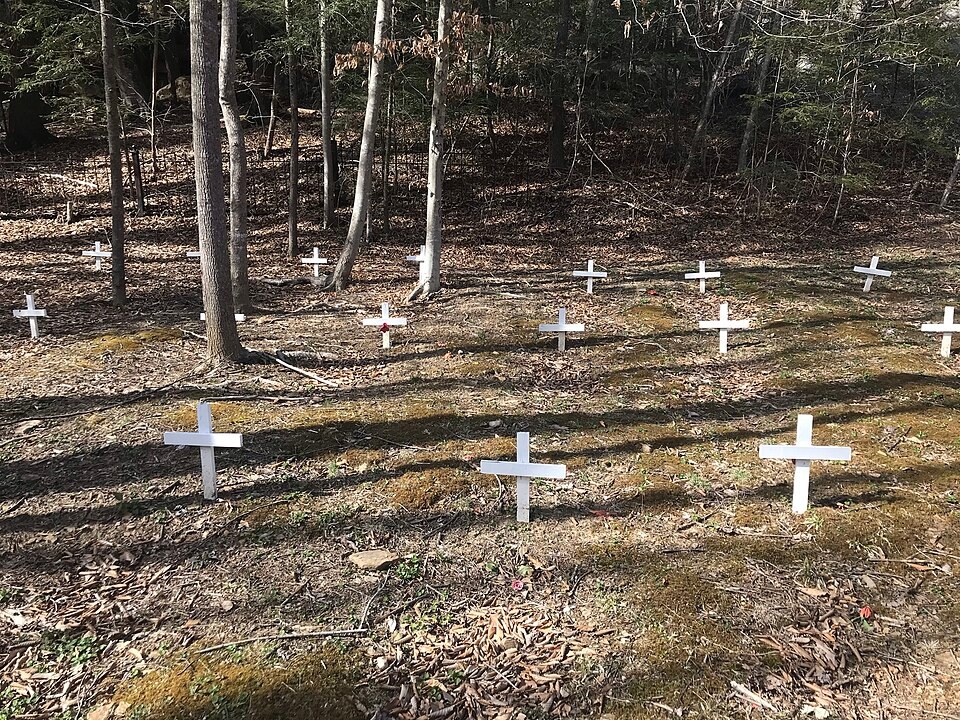
Public investigation drew attention to industrial lung disease and weak worker protections. Memorial efforts later recovered names and burial places. The case shows how a disaster can unfold through repeated exposure, with deaths dispersed across time and communities rather than concentrated in one visible event.[1]
Sources & image credits (3)
- Wikipedia — Hawks Nest Tunnel disaster ↗
- National Park Service — Hawks Nest Tunnel disaster ↗
- National Park Service — Workers memorial ↗
Jarek Tuszyński · CC BY 4.0 (source record). Resized for display. Image source ↗