Persian manuscript painting under the Timurids
Timurid workshops developed richly integrated manuscript arts whose influence extended across later Persianate courts.
- When
- Fourteenth–fifteenth centuries, especially late fifteenth-century Herat
- Where
- Timurid Iran and Central Asia
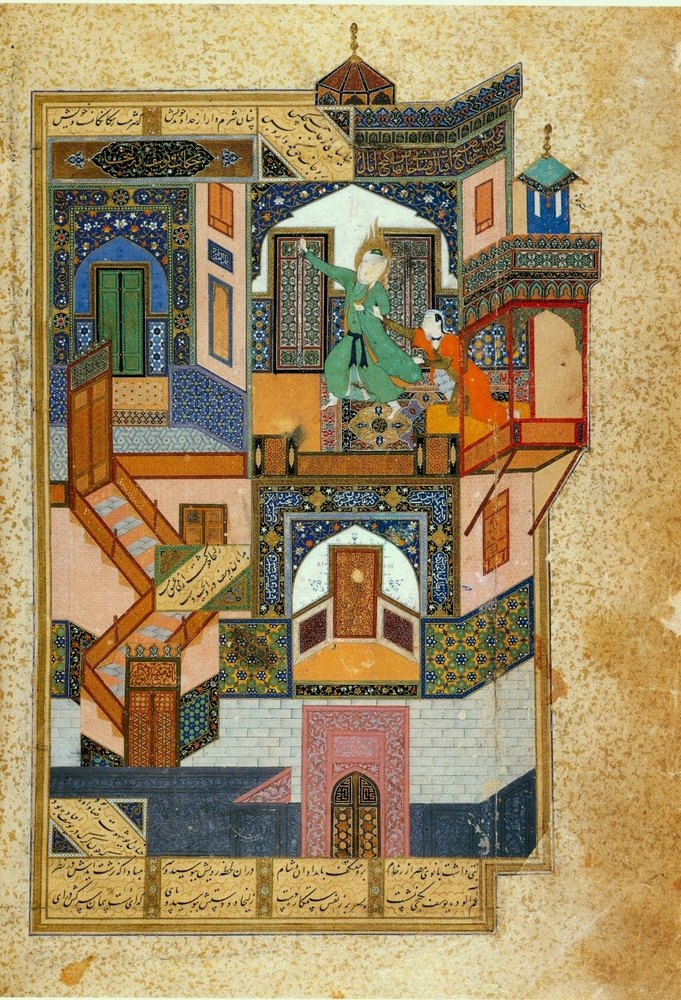
Timurid workshops developed richly integrated manuscript arts whose influence extended across later Persianate courts.
Background
Court patronage and the book
Timurid rulers supported libraries and workshops in which calligraphy, painting, illumination and binding formed a coordinated art. Manuscripts required expensive materials and skilled labour. They were objects of learning and prestige within courts built through conquest and political competition.[1]
What happened
- Fifteenth century
Herat becomes a major centre
Patronage under Timurid princes supported highly accomplished illustrated books. Artists developed intricate architectural settings, landscapes and scenes of human activity. The page was organised in relation to its text rather than conceived only as an independent picture for a gallery wall.[3]
Impact & evidence
Fame does not settle authorship
Kamal al-Din Bihzad became exceptionally celebrated, but later praise and signatures do not make every attributed work securely his. Scholars distinguish documented paintings from broader workshop styles and later imitations. That caution preserves the contributions of other makers rather than diminishing the tradition.[2]
Aftermath & legacy
A mobile artistic inheritance
Artists and manuscripts moved between courts, carrying practices into Safavid and Mughal settings. Modern national boundaries do not neatly contain this history. Dispersed manuscript pages retain extraordinary artistic value while often requiring reconstruction of the books and patronage networks to which they originally belonged.[1]
Sources & image credits (3)
- Wikipedia — Persian miniature ↗
- Encyclopaedia Iranica: Kamal al-Din Bihzad ↗
- Metropolitan Museum: Islamic painting and the Herat school ↗
Kamāl ud-Dīn Behzād Image source ↗