Norwegian Constitution
Norway established a constitution and elected assembly while negotiating a new union with Sweden.
- When
- 1814
- Where
- Eidsvoll and Norway
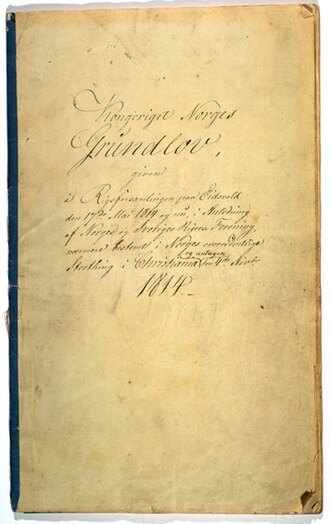
Norway established a constitution and elected assembly while negotiating a new union with Sweden.
Background
A transfer between monarchs challenged
The Napoleonic settlement threatened to transfer Norway from Danish to Swedish rule. Norwegian representatives instead assembled at Eidsvoll to establish a constitution. Their action asserted political autonomy without securing complete independence for the remainder of the century.[1]
What happened
- 17 May 1814
The constitution adopted
The new framework established an elected Storting, separated governing powers and limited royal authority. Its franchise was broad by some contemporary European comparisons but did not include everyone. Women and many men remained outside electoral participation, and the original text included religious exclusions.[2]
- November 1814
Adaptation to union with Sweden
After conflict and negotiation, Norway entered a union under the Swedish monarch while retaining a revised constitution and substantial internal institutions. The May and November texts therefore represent different stages of the same constitutional year.[1]
Impact & evidence
Political inclusion expanded later
Parliamentary government and wider suffrage developed through subsequent struggles. Celebrating 1814 should not imply that modern democratic equality was already achieved. The constitution created institutions within which later claims could be pressed and contested.[3]
Aftermath & legacy
An enduring framework
The constitution survived the union and its dissolution in 1905, with amendments over time. Its longevity reflects adaptation as well as preservation. The historical milestone is both a declaration of self-government and the beginning of a much longer process of democratisation.[2]
Sources & image credits (3)
- Wikipedia — Constitution of Norway ↗
- Storting: Norway's constitution ↗
- Storting: milestones in democratic history ↗
Grunnlovsgivende forsamling Image source ↗