Non-Euclidean geometry
Mathematicians showed that coherent geometries could be built without Euclid's parallel postulate.
- When
- Nineteenth century
- Where
- Russia, Hungary and wider mathematical communities
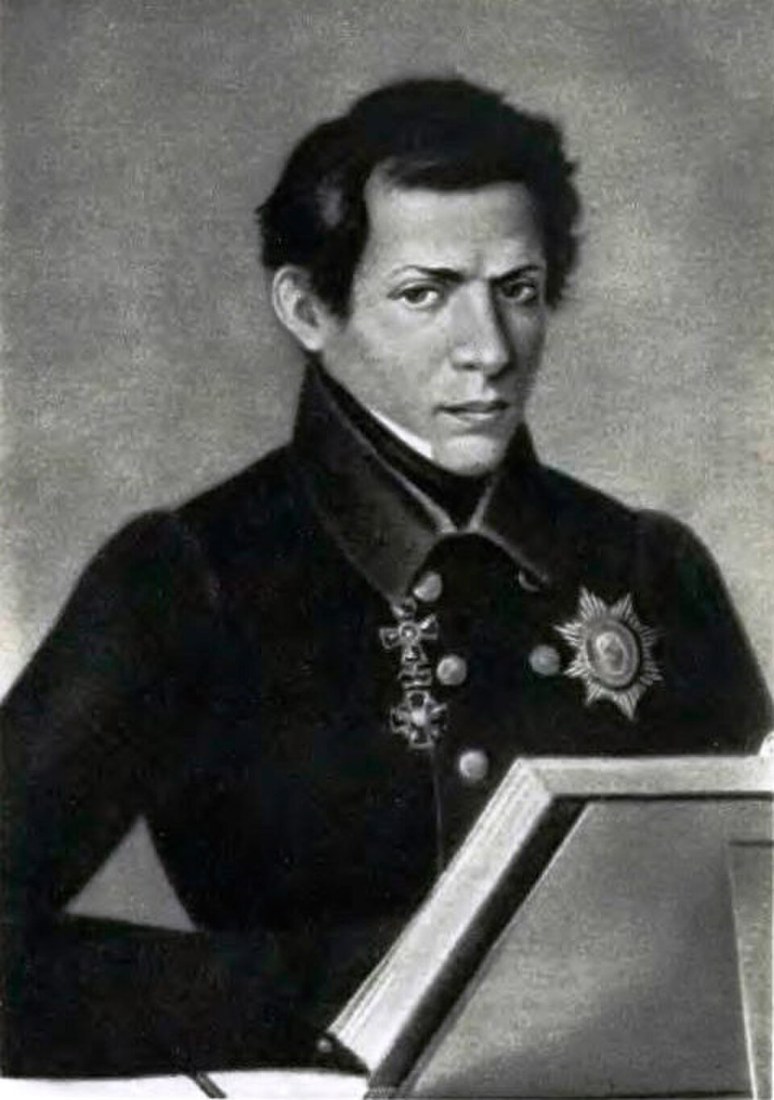
Mathematicians showed that coherent geometries could be built without Euclid's parallel postulate.
Background
A postulate that resisted proof
For centuries, mathematicians tried to derive Euclid's rule about parallels from his other assumptions. The difficulty was not simply a missing ingenious argument. Changing the postulate could produce a different mathematical system rather than an immediate contradiction.[2]
What happened
- 1820s–1830s
Lobachevsky and Bolyai publish
Nikolai Lobachevsky and János Bolyai independently developed what is now called hyperbolic geometry. Gauss also investigated related ideas without publishing a comparable account. Giving each contribution its proper status avoids treating private discovery, public proof and later recognition as the same event.[2]
- Mid–late nineteenth century
New geometries gain firm foundations
Riemann broadened the study of geometry, while models developed by Beltrami and others clarified the consistency of non-Euclidean systems relative to established mathematics. These developments transformed an apparently paradoxical idea into a productive field.[1]
Impact & evidence
Assumptions determine the system
Euclidean geometry remained valid within its own assumptions. The breakthrough was recognising that it was not the only logically coherent geometry. Statements about triangles and parallels could differ because the underlying space differed.[2]
Aftermath & legacy
Consequences beyond pure mathematics
The new geometries changed debates about mathematical truth and later supplied tools for describing physical space. Their relationship to relativity is significant, but the nineteenth-century work should not be portrayed as having been created solely to anticipate twentieth-century physics.[1]
Sources & image credits (2)
Lev Kryukov Image source ↗