Near East Relief and Armenian refugee assistance
An international relief network supported survivors of genocide, displacement and famine.
- When
- 1915–1930
- Where
- Ottoman territories, Caucasus and eastern Mediterranean
An international relief network supported survivors of genocide, displacement and famine.
Background
Mass displacement created urgent needs
Relief committees formed in the United States in 1915 as reports of persecution and suffering reached supporters abroad. The organisation changed names and expanded as war, genocide and the collapse of empires uprooted communities.[3]
What happened
- 1915–1930
A large network of care
Near East Relief operated orphanages and supported displaced families across several territories. Its historical society reports care for 132,000 children in the orphanage system over this period, with additional children receiving partial support. These are programme figures, not a count of deaths prevented measured through a controlled comparison.[2]
- 1919–1930
An emergency agency changed its mission
The organisation adopted the name Near East Relief in 1919 as assistance extended beyond its initial Armenian focus to other uprooted communities. In 1930 it became the Near East Foundation. That change reflected a shift from immediate survival and orphan care toward longer-term social and economic development.[3]
Impact & evidence
Evacuation and resettlement
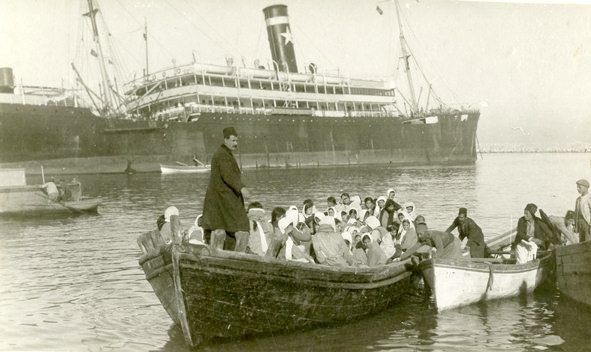
The organisation moved thousands of children from Turkey after the destruction of Smyrna. Transport, food, shelter, education and vocational training linked immediate survival with longer-term efforts to rebuild lives.[2]
Aftermath & legacy
From emergency relief to development
The organisation's work gradually shifted toward community and rural development. Survivors and local workers helped sustain the relief effort alongside international fundraisers. Institutional archives preserve accounts of food, shelter, education and the difficulties of rebuilding lives after displacement.[3]
Sources & image credits (3)
- Wikipedia — Near East Foundation ↗
- Near East Relief Historical Society: children and orphanages ↗
- Near East Relief Museum: institutional history ↗
Mennonite Church USA Archives · No restrictions Image source ↗