The Marshall Plan
Supporting European economic reconstruction through a major aid programme.
- When
- 1947–1952
- Where
- United States and participating European countries
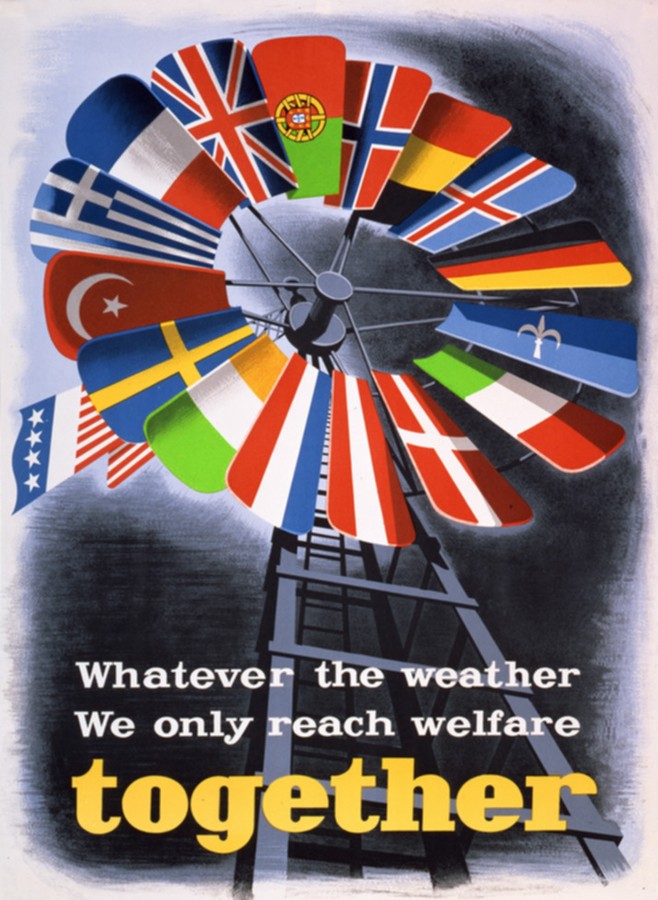
The European Recovery Program supplied economic assistance to participating European countries after the Second World War. It combined reconstruction with American strategic interests as the Cold War division of Europe deepened.
Background
Damaged economies
War had disrupted production, trade and infrastructure. Recovery required investment and coordination as well as immediate relief.[1]
What happened
Impact & evidence
Money, production and strategic interests
The United States supplied approximately $13.3 billion over four years through the European Recovery Program. Assistance supported recovery while also serving American interests in stable trading partners and resistance to communist influence. European governments and workers remained active participants in reconstruction. The programme’s scale was consequential, but a single aid scheme cannot account for every part of Europe’s recovery.[1]
Aftermath & legacy
Recovery and power
The programme contributed to reconstruction and cooperation among participating states. It should be understood alongside national recovery efforts and Cold War policy, rather than presented as purely disinterested charity.[1]
Sources & image credits (1)
E. Spreckmeester (also credited as "I. Spreekmeester"), published Economic Cooperation Administration; Public domain; via Wikimedia Commons. Image source ↗