The Berlin Airlift
Supplying West Berlin by air during a Soviet blockade of surface routes.
- When
- 1948–1949
- Where
- Berlin and western Germany
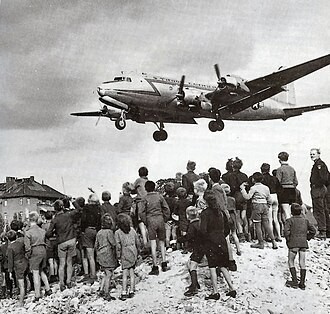
American and British aircraft carried food and fuel to the western sectors of Berlin after Soviet forces blocked land and water access. The operation sustained civilians while becoming a major confrontation in the developing Cold War.
Background
An occupied and divided city
Berlin lay within the Soviet occupation zone but was itself divided among the wartime Allies. Disagreements over Germany's future escalated into a crisis of access.[1]
What happened
Impact & evidence
Keeping a city supplied
The blockade confronted the Western Allies with a choice between withdrawal, a dangerous attempt to force surface access, and supply by air. Aircraft brought essentials through agreed corridors while crews and ground staff built a sustained logistical operation. The blockade was lifted in May 1949. The operation kept the western sectors connected to their allies while the political division of Germany deepened.[1]
Aftermath & legacy
Relief within confrontation
The airlift avoided an immediate armed attempt to force the roads open. It also hardened the political division of Germany and Europe.[1]
Sources & image credits (1)
Henry Ries / USAF; Public domain; via Wikimedia Commons. Image source ↗