Nansen passports for refugees
Creating an internationally recognised travel document for people without national passports.
- When
- From 1922
- Where
- International
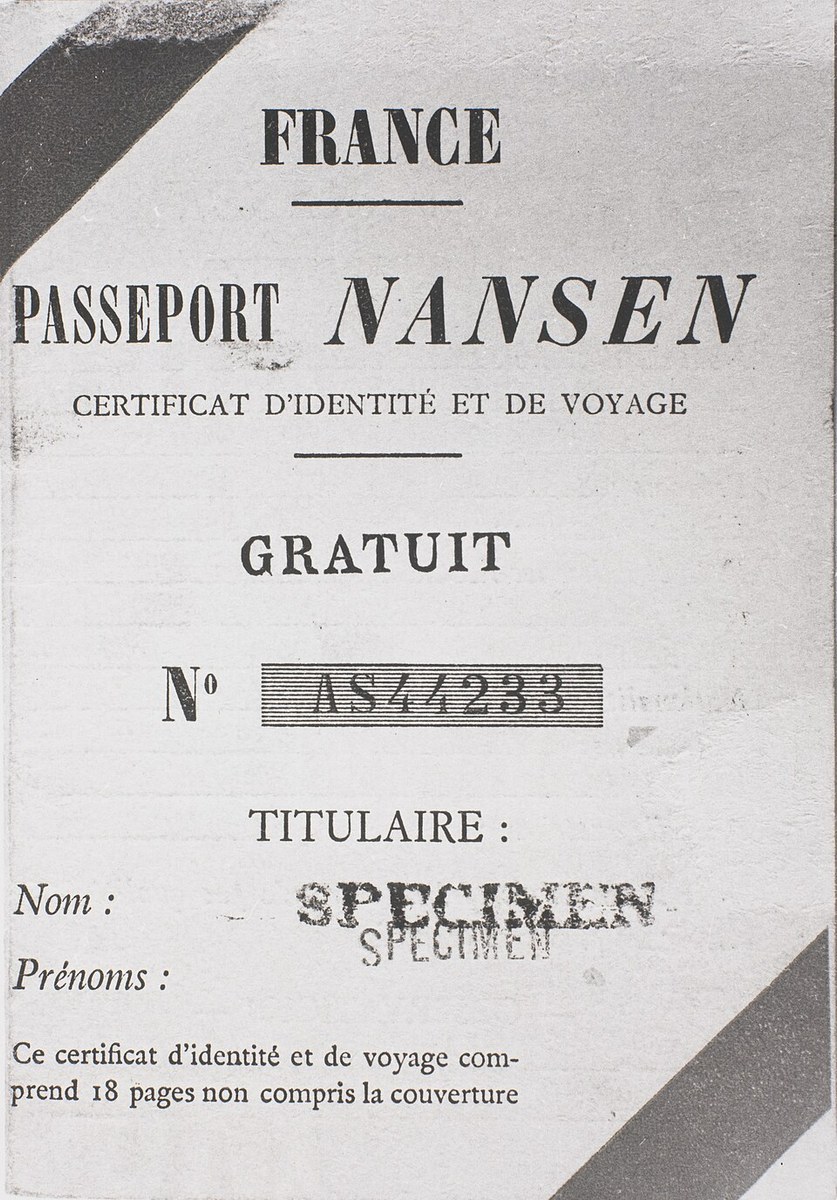
Creating an internationally recognised travel document for people without national passports. War, revolution and changes of citizenship left many refugees unable to obtain passports. Without recognised identity documents, crossing a border or taking up work elsewhere could become impossible.
Background
Displacement without papers
War, revolution and changes of citizenship left many refugees unable to obtain passports. Without recognised identity documents, crossing a border or taking up work elsewhere could become impossible. A person might be physically outside the country of persecution yet still trapped by the absence of legal recognition.[1]
What happened
- 1921–1922
An international response
Fridtjof Nansen, appointed the League of Nations' High Commissioner for Refugees, promoted a recognised identity certificate. The document introduced in 1922 became known as the Nansen passport. It initially addressed Russian refugees and was later extended to other groups.[1]
- 1920s–1930s
Recognition makes movement possible
Participating states accepted the certificates, enabling many holders to travel or resettle. The arrangement relied on governments recognising the document and permitting entry. It was not a universal passport and did not automatically grant nationality, residence or freedom to enter any country.[1]
Impact & evidence
An important but limited instrument
UNHCR describes the initiative as helping almost half a million displaced people settle elsewhere. Its significance was the recognition that protection could require international documentation when a national government would not provide it. Gaps in coverage and restrictive immigration policies remained.[2]
Aftermath & legacy
A predecessor of modern refugee documents
Later refugee law developed more formal obligations concerning travel papers. The Nansen system did not solve statelessness, but established a workable response to one of its immediate consequences. It made an administrative object central to the possibility of rebuilding a life across borders.[1]
Sources & image credits (3)
- Wikipedia — Nansen passport ↗
- UNHCR — History of international refugee protection ↗
- UNHCR — Refugee travel documents ↗
Creator:UNHCR · Public domain (source record). Resized for display. Image source ↗