The atomic bombing of Nagasaki
The second American atomic attack on a Japanese city, three days after Hiroshima.
- When
- 9 August 1945
- Where
- Nagasaki, Japan
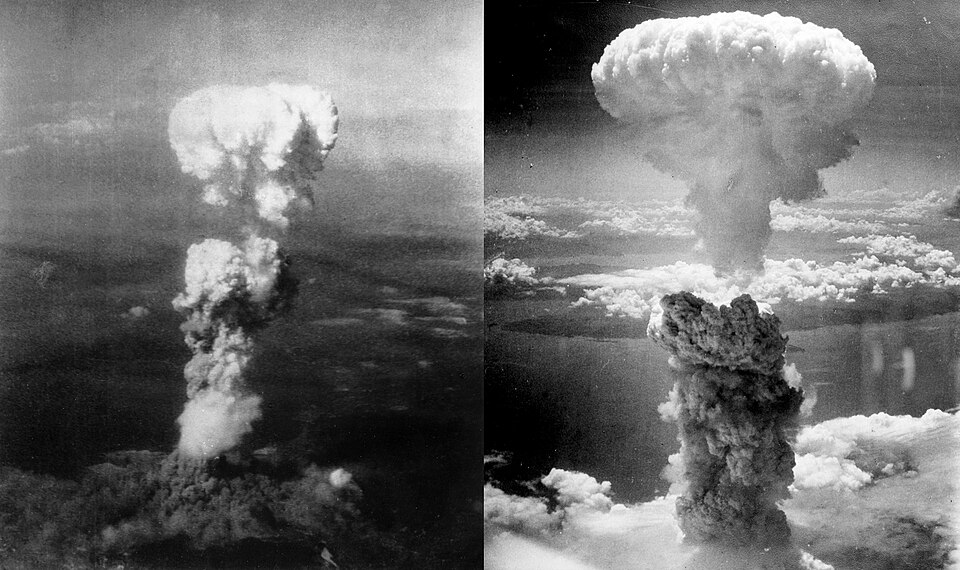
On 9 August 1945, the United States detonated a plutonium bomb over Nagasaki. The city’s terrain shaped the spread of destruction, but entire neighbourhoods were devastated. Nagasaki’s official historical figures record approximately 74,000 deaths and a similar number of injured people.
Background
A second attack within days
The attack came only three days after Hiroshima. The American aircraft Bockscar carried a plutonium-core weapon; its original target was Kokura. When conditions prevented the planned attack there, the mission turned to Nagasaki. That operational change determined which city’s population would experience the bombing.[1]
What happened
- 9 August 1945
The bomb explodes at 11:02 a.m.
Bockscar, commanded by Charles Sweeney, dropped its weapon over Nagasaki. The airburst produced destructive heat and blast, while radiation added immediate and longer-term dangers. The Urakami district suffered especially severe destruction.[1]
- 1945
Rescue in a devastated city
Survivors searched for relatives and assistance among destroyed buildings. Burns and other injuries overwhelmed what care remained available. The physical landscape of the attack included civilian homes and institutions as well as industrial facilities.[2]
Impact & evidence
The recorded human toll
Nagasaki gives 73,884 dead and 74,909 injured in its historical account. These figures should be read as estimates assembled after catastrophic destruction, rather than precise real-time measurements. Deaths and injuries are separate categories; neither should be confused with the number exposed to radiation.[3]
Aftermath & legacy
A continuing civilian history
The story continued through survival, treatment and reconstruction. Photographs and testimony preserve the destruction of neighbourhoods and the consequences for people whose lives did not end on the day of the attack. These records anchor remembrance in the experience of the city’s inhabitants.[2]
Sources & image credits (3)
- Nagasaki City — The bombing at 11:02 ↗
- Nagasaki City — Damage and casualties ↗
- Nagasaki City — Recorded deaths and injuries ↗
George R. Caron / Charles Levy; Public domain Image source ↗