My Lai massacre
US soldiers murdered hundreds of unarmed Vietnamese civilians.
- When
- 16 March 1968
- Where
- Sơn Mỹ, South Vietnam
US soldiers murdered hundreds of unarmed Vietnamese civilians.
Background
An operation built on enemy assumptions
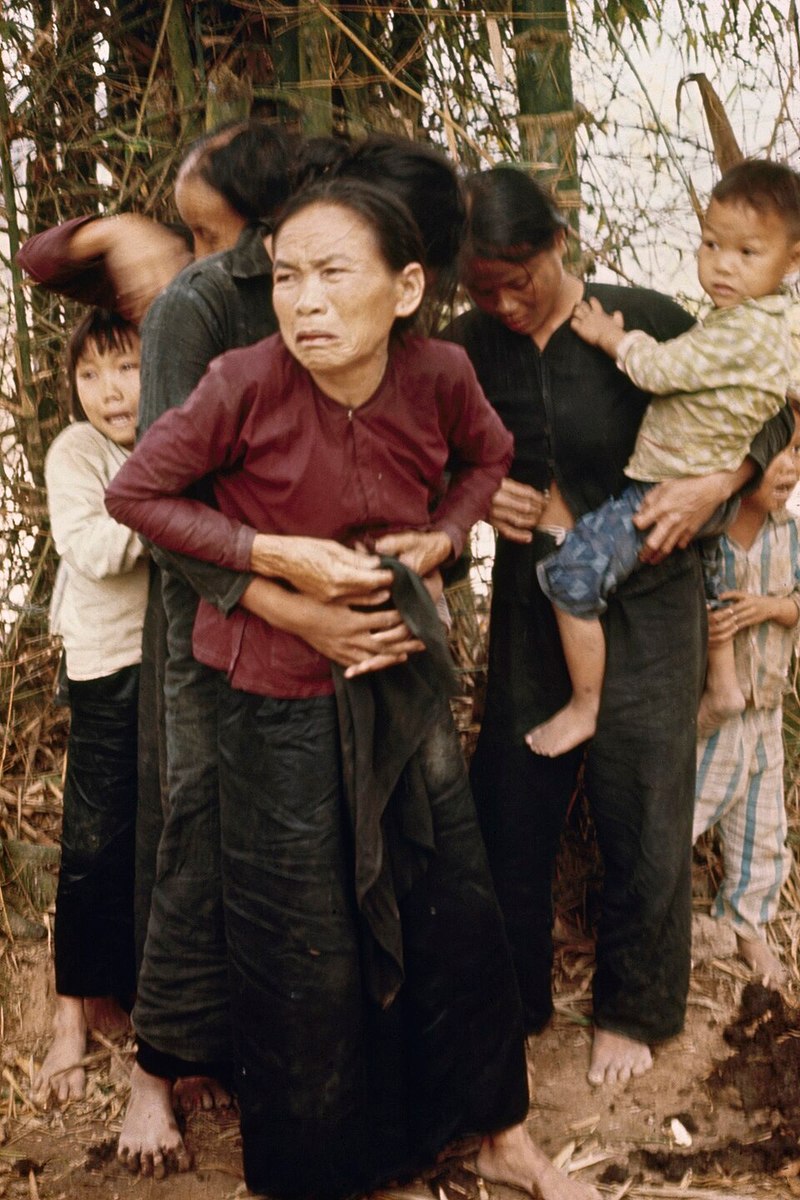
American troops entered hamlets in Sơn Mỹ expecting enemy forces. Instead of distinguishing civilians from combatants, soldiers killed residents, including children, women and older people.[1]
What happened
- 16 March 1968
Murder and intervention
The killings included people gathered together under soldiers’ control. Helicopter crew members led by Hugh Thompson intervened to protect some survivors, demonstrating that participation was neither inevitable nor universal.[2]
- 1969
The story reached the public
Ron Ridenhour’s efforts to alert officials, Seymour Hersh’s reporting and Ronald Haeberle’s photographs helped expose the killings in 1969. Public knowledge followed a long period in which the operation had been represented as a military success. The disclosure triggered investigations and intensified debate about the conduct of the war.[1]
Impact & evidence
Different counts and a cover-up
An American investigation counted 347 victims, while the local Vietnamese figure was 504 across the affected area. Early reports concealed the massacre. Whistleblowing, journalism, photographs and military investigations subsequently exposed it.[3]
Aftermath & legacy
Limited convictions, lasting consequences
The gap between the scale of the crime and the limited criminal accountability became central to its legacy. My Lai remains a case about command failure, unlawful orders, civilian protection and the responsibility to intervene rather than obey or remain silent.[2]
Sources & image credits (3)
- Wikipedia — My Lai massacre ↗
- US Army Combined Arms Center: My Lai at 50 ↗
- PBS American Experience: investigation and victim counts ↗
Ronald L. Haeberle · Public domain Image source ↗