Muttur aid workers massacre
Seventeen Action Against Hunger staff executed at their office.
- When
- 4 August 2006
- Where
- Muttur, Trincomalee district, Sri Lanka
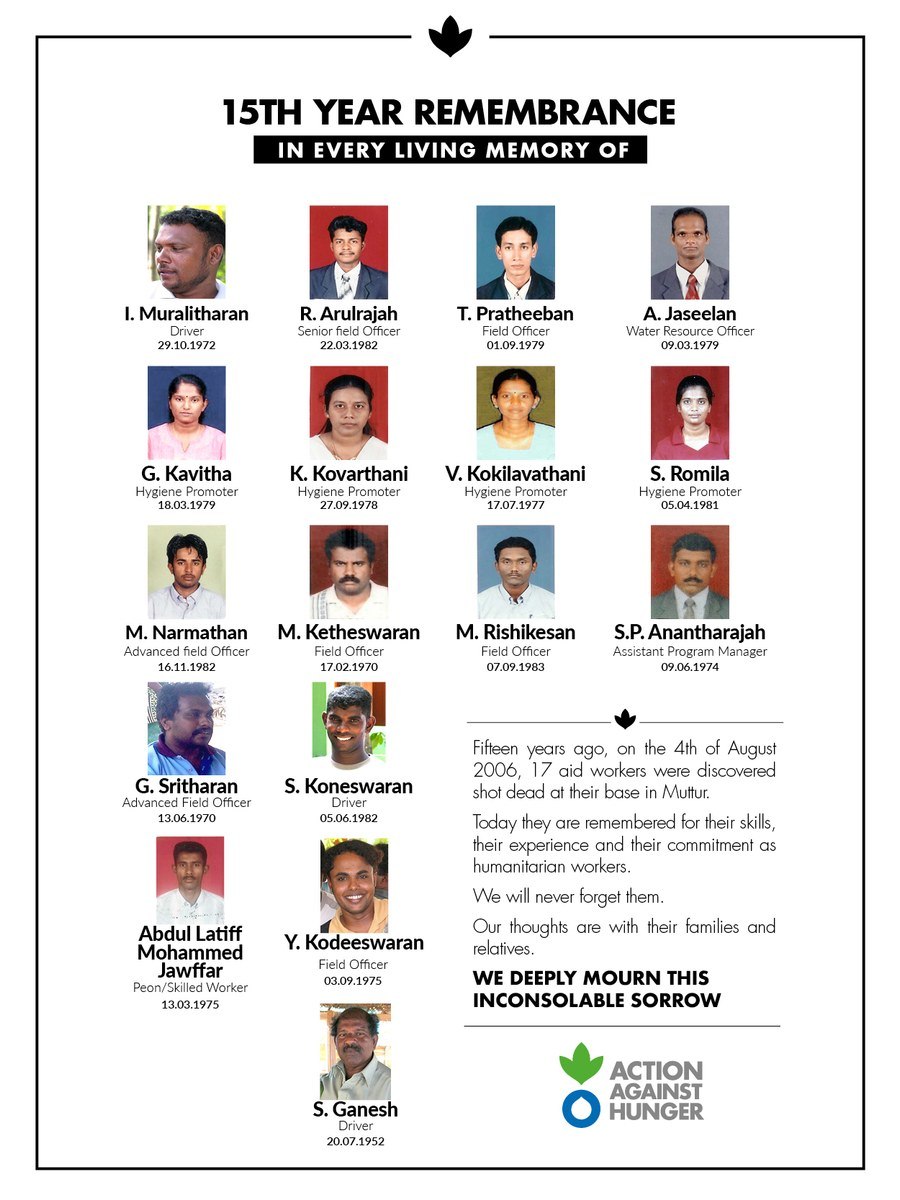
Seventeen Action Against Hunger staff executed at their office.
Background
Humanitarian work during renewed fighting
Action Against Hunger’s local staff worked in an area affected by conflict and the aftermath of the Indian Ocean tsunami. Fighting in Muttur trapped humanitarian personnel as control of the town changed.[1]
What happened
- 4 August 2006
Staff killed inside the compound
Seventeen workers were found killed at close range in their office compound. Sixteen were Tamil and one was Muslim. Four were women. Describing every victim as Tamil would erase the identity of one of the people killed.[1]
Impact & evidence
Evidence and disputed responsibility
International monitors and subsequent human-rights investigations examined the timing of government control, witness accounts and forensic evidence. Human Rights Watch described substantial evidence implicating security personnel and serious flaws in the authorities’ response. Findings by investigators are distinct from convictions of individual suspects.[2]
Aftermath & legacy
Impunity and the safety of relief workers
The massacre became an emblematic case in international scrutiny of Sri Lanka. It also demonstrated that local humanitarian staff could face lethal danger despite their civilian role. Calls for justice concern the victims’ families and the broader ability of aid organisations to operate without their workers becoming targets.[2]
Sources & image credits (2)
- Wikipedia — 2006 Trincomalee massacre of NGO workers ↗
- Human Rights Watch: Open Wounds and Mounting Dangers, 2021 ↗
Action Against Hunger; photographer not identified · Copyright retained by the rights holder Image source ↗