Mughal miniature painting workshops
Mughal workshops brought diverse artists into collaborative projects that transformed manuscript illustration and portraiture.
- When
- Sixteenth–seventeenth centuries and later continuities
- Where
- Mughal South Asia
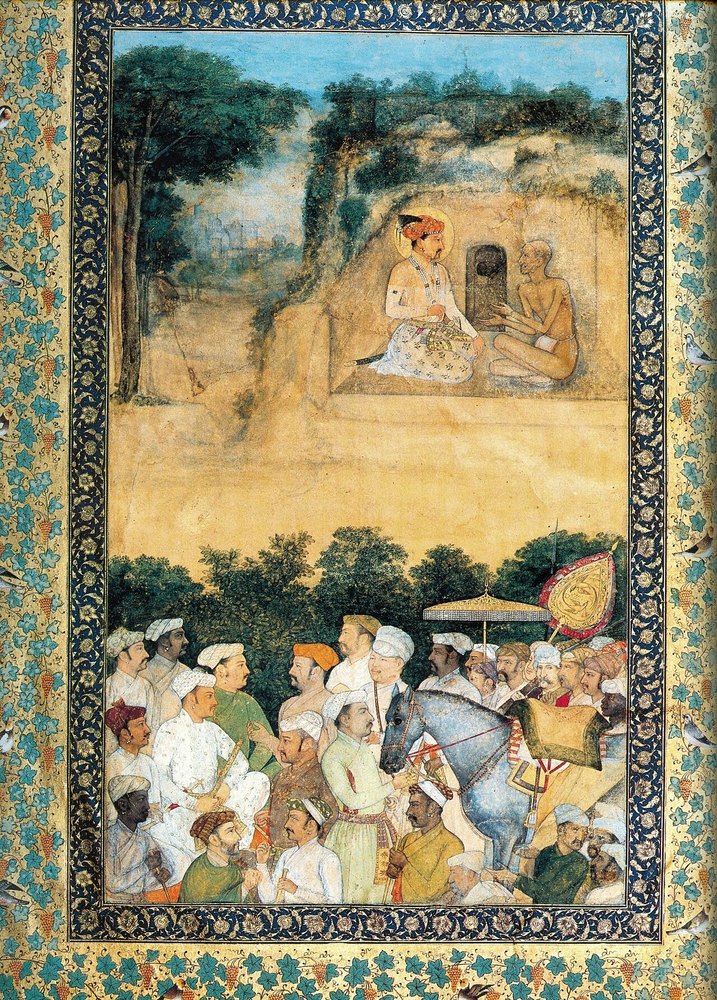
Mughal workshops brought diverse artists into collaborative projects that transformed manuscript illustration and portraiture.
Background
An imperial art with multiple inheritances
Mughal painting drew on Persian manuscript traditions, regional South Asian practices and later encounters with European images. Court patronage supplied resources and subjects. The result was not a single tradition copied intact, but a changing art shaped by movement and collaboration.[3]
What happened
- Akbar's reign, 1556–1605
Large manuscript projects
Akbar's workshops produced an exceptional volume of illustrated manuscripts. Work was distributed among artists, with changing teams contributing to individual projects. This organisation helped develop a recognisable imperial style while retaining evidence of different hands and skills.[2]
Impact & evidence
Books, portraits and natural observation
Paintings narrated histories and literature, represented rulers and investigated animals and plants. They could express curiosity and artistic refinement while also presenting imperial authority. Their beauty does not make their political role disappear.[3]
Aftermath & legacy
Recovering collaboration
Attributions, inscriptions and comparison help reconstruct relationships among artists. A workshop history moves beyond both anonymous craftsmanship and a list of isolated geniuses. The paintings' later dispersal into albums and museum collections makes recovering original projects and contexts an important part of interpretation.[2]
Sources & image credits (3)
- Wikipedia — Mughal painting ↗
- Yael Rice: Workshop as Network ↗
- Metropolitan Museum of Art: Mughal painting traditions ↗
Govardhan (attribution) Image source ↗