Minab school attack
A US missile attack on a functioning primary school that killed more than 150 people, including around 120 children.
- When
- 28 February 2026
- Where
- Shajareh Tayyebeh Elementary School, Minab, Hormozgan, Iran
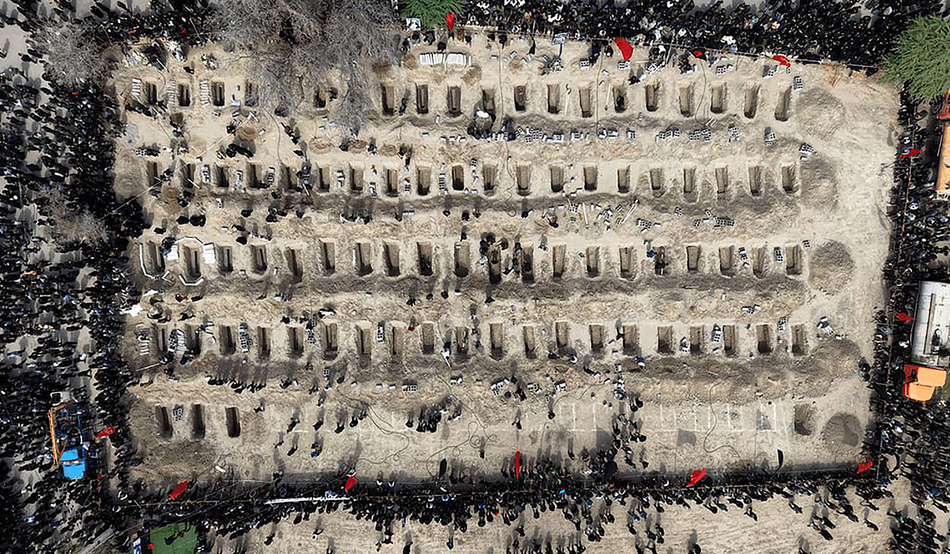
Shajareh Tayyebeh Elementary School was struck during the opening US–Israeli attacks on Iran on 28 February 2026. Children, teachers and parents were killed. Investigations identified a direct strike on the school and failures to recognise its civilian use. In September 2026, a UN fact-finding mission found reasonable grounds to believe the United States had committed a war crime.
Background
A school beside a naval compound
The school stood next to an Islamic Revolutionary Guard Corps naval compound. Human Rights Watch’s examination of historical satellite imagery found a wall separating it from the compound by September 2016. That distinction matters: a neighbouring military installation does not make a functioning school a military target.[3]
A school day interrupted
Children were attending school that Saturday morning. Amnesty’s interviews indicated that staff contacted parents to collect pupils after the wider attacks began, but some families had not arrived when the school was struck.[1]
What happened
- 28 February 2026
The school is struck
The attack destroyed much of the school. Amnesty placed it after a 10:23 a.m. image showed the buildings intact; Iranian officials gave 10:45 a.m. Girls and boys attended on separate floors.[1]
- February–March 2026
Rescue and burial
People searched the wreckage for survivors and recovered victims. Human Rights Watch verified photographs and videos from the immediate aftermath, rescue operations and funerals, and examined imagery of the nearby cemetery. These records document the human consequences independently of later arguments over targeting information.[2]
- March 2026
Investigators examine the weapons
Amnesty concluded that US forces struck the school with guided weapons. It identified a likely Tomahawk in footage of the adjacent compound, but noted that this filmed missile did not itself hit the school.[1]
- 17 September 2026
UN mission reports its findings
The mission attributed Tomahawk missile strikes on the school to the United States and described more than 150 deaths, including approximately 120 girls and boys. Its findings concerned civilian deaths in Minab alongside a separate attack in Lamerd; the combined toll must not be mistaken for the school’s death toll.[4]
Impact & evidence
156 people, including 120 children
Amnesty’s updated account cites Iranian authorities reporting 156 deaths, including 120 children. On 28 April 2026 it replaced its earlier figure of 168, while noting that access restrictions prevented independent verification of the overall toll.[1]
A long-established school
The historical imagery was not the only available indication. Human Rights Watch’s April analysis noted reporting on years of publicly accessible online school activity. It questioned how target verification could have missed such evidence. The concern was not simply that a weapon went astray: the available damage pattern indicated strikes directed at individual buildings.[3]
Checking images against the site
Human Rights Watch reviewed fourteen videos and photographs of the immediate aftermath and rescue, four from funerals, and roughly forty historical satellite images. It also compared victim names with identifying information visible on funeral material. That work established verifiable elements of the attack while leaving questions about the full toll and internal targeting decisions for further investigation.[2]
Aftermath & legacy
What accountability requires
Human Rights Watch argued that investigators needed to establish what commanders knew, which information they checked and whether they recklessly disregarded the risk to civilians. Calling an attack a targeting error does not settle those questions. Its April legal analysis distinguished a breach of precautions from the additional evidence needed to establish individual criminal responsibility.[3]
September 2026 finding
The UN Independent International Fact-Finding Mission on Iran reported reasonable grounds to believe the US committed the war crime of launching indiscriminate attacks, including the strike on the clearly identifiable Minab school. It called for reparations and accountability. This is the mission’s finding, not a criminal conviction of a named individual.[4]
Sources & image credits (4)
- Amnesty International — investigation; death toll updated 28 April 2026 ↗
- Human Rights Watch — initial investigation, 7 March 2026 ↗
- Human Rights Watch — targeting and war-crime analysis, 20 April 2026 ↗
- OHCHR — 17 September 2026 mission statement, reproduced by GlobalSecurity ↗
Image supplied by the site owner; original photographer not identified.