Measurement of Earth's circumference by Eratosthenes
Using the Sun's angle and a distance on the ground to estimate Earth's circumference.
- When
- Third century BCE
- Where
- Alexandria and Syene, Egypt
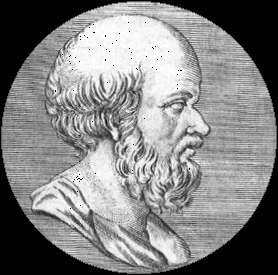
Using the Sun's angle and a distance on the ground to estimate Earth's circumference.
Background
Measuring a world already understood as spherical
Eratosthenes worked in the intellectual world of Hellenistic Alexandria. His celebrated calculation concerned Earth's size. It was not the first discovery that Earth is round, and its reasoning depends on treating Earth as approximately spherical.[2]
What happened
- Third century BCE
Two places, different shadows
In the traditional account, sunlight fell nearly vertically at Syene at midsummer noon while a vertical object cast a shadow at Alexandria. Treating sunlight as parallel, the difference in angle represented a fraction of a complete circle around Earth.[2]
Impact & evidence
A local observation became a global estimate
An angle of about one-fiftieth of a circle implied that the corresponding north–south distance was about one-fiftieth of Earth's circumference. Multiplying distance by that factor made a measurement of the planet possible without travelling around it.[2]
Aftermath & legacy
Accuracy and the surviving record
The calculation survives through later accounts rather than Eratosthenes' original treatise. Ancient units, the cities' positions and the precise observations complicate claims of an exact modern percentage error. The geometrical method remains the central achievement, even though the original observations cannot be reconstructed with complete certainty.[1]
Sources & image credits (2)
Creator not identified; see linked source · Public domain Image source ↗