Manila massacre
Japanese atrocities against civilians during the battle for Manila.
- When
- February–March 1945
- Where
- Manila, Philippines
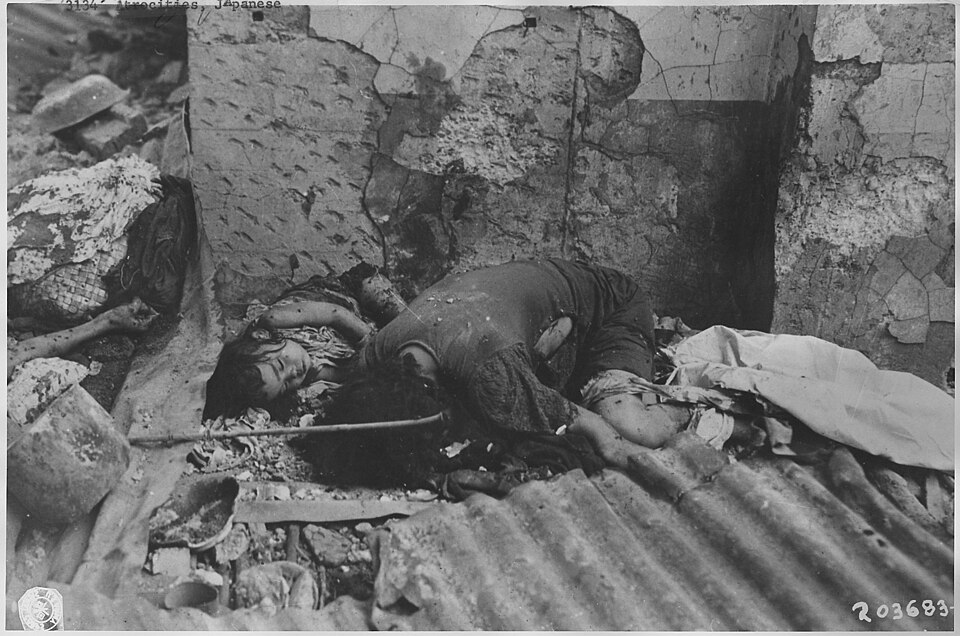
Japanese atrocities against civilians during the battle for Manila.
Background
A capital trapped in urban warfare
Japanese forces defended Manila as American and Filipino forces advanced. Civilians remained in densely built districts, churches, hospitals and homes, with limited routes to safety.[1]
What happened
- 1945
Systematic attacks on civilians
Japanese units carried out executions, rape and killings of families and groups held in buildings. The atrocities took place alongside destructive artillery fire and combat across the city.[1]
Impact & evidence
Do not confuse massacre and battle totals
Around 100,000 civilian deaths is commonly cited for the battle as a whole. It includes deaths from multiple causes and is not a verified count solely of people deliberately murdered by Japanese troops. The distinction matters without diminishing the documented massacres.[1]
Aftermath & legacy
A destroyed city and its survivors
The destruction of neighbourhoods, institutions and families marked Manila’s reconstruction. Memorials and survivor testimony preserve individual experiences that a battle-wide number cannot express. War-crimes proceedings also made command responsibility a major issue in the aftermath.[2]
Command responsibility after the battle
The prosecution of General Tomoyuki Yamashita became a major post-war case concerning a commander’s responsibility for atrocities by forces under his command. The legal proceedings did not restore the devastated city or resolve every individual crime. Survivors carried bereavement, displacement and the destruction of community institutions into the post-war years.[1]
Sources & image credits (2)
Unknown author Unknown author or not provided · Public domain Image source ↗