Magna Carta
A failed peace settlement became an enduring reference point for limits on government.
- When
- 1215 and later reissues
- Where
- Runnymede and medieval England
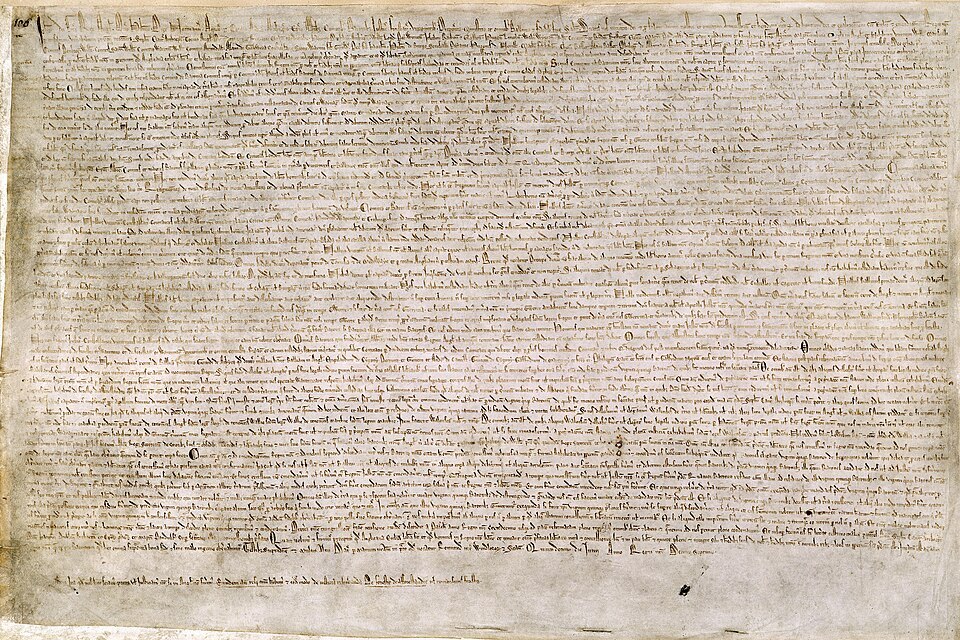
A failed peace settlement became an enduring reference point for limits on government.
Background
A king in conflict with his barons
King John's military failures, financial demands and exercise of power helped provoke rebellion. The charter addressed particular medieval grievances about property, inheritance, justice and royal administration. It was not drafted as a modern democratic constitution.[1]
What happened
- June 1215
The charter was sealed
At Runnymede, John accepted provisions placing written restraints on royal government. Its association with lawful judgment and limits on arbitrary power became especially important to later readers.[2]
Impact & evidence
The first settlement collapsed
The 1215 charter was annulled and civil war continued. Revised versions under Henry III gave the document a more durable legal existence. The later history cannot be explained as the uninterrupted enforcement of the original agreement.[1]
Aftermath & legacy
A changing constitutional symbol
Later generations used Magna Carta to argue that rulers must act within the law. That influence was real even though the original beneficiaries and social assumptions were far narrower than universal equal citizenship. Its meaning developed through reinterpretation as well as through the survival of particular clauses.[2]
Sources & image credits (2)
Original authors were the barons and King John of England . Uploaded by Earthsound . · Public domain Image source ↗