Jeju uprising and massacres
Security-force repression and armed conflict killed an estimated 25,000–30,000 people on Jeju.
- When
- 1947–1954, with the uprising beginning in April 1948
- Where
- Jeju Island, South Korea
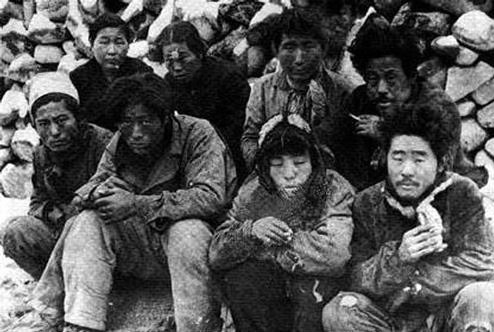
Security-force repression and armed conflict killed an estimated 25,000–30,000 people on Jeju.
Background
Division after Japanese rule
Jeju's violence emerged amid liberation from Japanese colonial rule, United States military government and the struggle over Korea's political future. Police shootings on 1 March 1947 intensified local opposition. Repression, arrests and hostility toward right-wing youth organisations preceded the armed uprising; the story does not begin with guerrilla attacks alone.[2]
What happened
- 3 April 1948
Uprising and retaliation
Left-wing insurgents attacked police posts and right-wing groups. Security operations subsequently expanded across the island. The establishment of the Republic of Korea in August did not end the violence: military reinforcements and hard-line suppression placed villages and civilians under growing threat.[2]
- 1948–1954
Villages destroyed and residents killed
Scorched-earth operations devastated inland settlements, and people seeking safety faced accusations of aiding guerrillas. Violence also included killings by insurgents. Further executions followed the Korean War's outbreak in 1950. Restrictions around Mount Halla were lifted in 1954, marking the conventional end of the prolonged crisis.[2]
Impact & evidence
25,000–30,000 people killed
The truth-investigation estimate cited by the Peace Foundation is much larger than its register of individually recognised victims. That register includes distinct categories such as deaths, disappearances, disability and imprisonment; it must not be treated as a simple death count. The estimate represents more than a tenth of the island's population at the time.[3]
Aftermath & legacy
Silence challenged by survivors
For decades, anti-communist stigma made public mourning and investigation dangerous. Survivors, families and local researchers pressed for recognition, leading to official investigation and a presidential apology in 2003. These later findings challenge the earlier portrayal of collective punishment as legitimate suppression of rebellion.[2]
Sources & image credits (3)
- Wikipedia — Jeju uprising ↗
- Jeju 4·3 Peace Foundation: historical account ↗
- Jeju 4·3 Peace Foundation: victims and losses ↗
Unknown author Image source ↗