Japan's postwar constitution
A new constitutional order based on popular sovereignty, rights and renunciation of war.
- When
- Promulgated 1946; effective 3 May 1947
- Where
- Japan
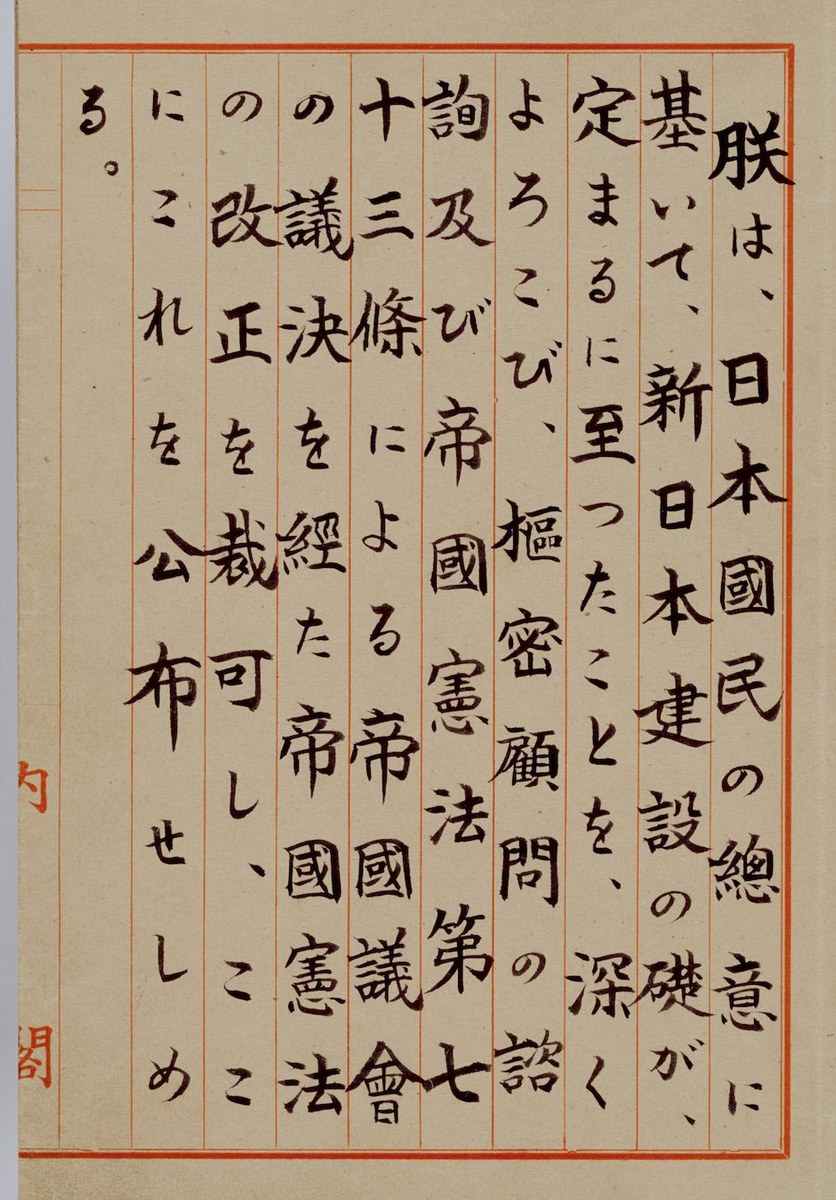
A new constitutional order based on popular sovereignty, rights and renunciation of war. Japan's defeat in 1945 placed constitutional reform within the Allied occupation. Japanese officials and occupation authorities proposed changes to the Meiji system.
Background
Defeat and occupation
Japan's defeat in 1945 placed constitutional reform within the Allied occupation. Japanese officials and occupation authorities proposed changes to the Meiji system. The resulting process involved substantial American drafting influence as well as Japanese political debate and legislative adoption.[1]
What happened
- 1946
A new draft and parliamentary action
The proposed constitution relocated sovereignty from the emperor to the people and defined the emperor as a symbol. It established a rights framework and parliamentary government. Public discussion and Diet deliberations modified the text before promulgation.[1]
- 3 May 1947
The constitution takes effect
The new framework replaced the Meiji constitution. Article 9 renounced war and addressed armed force, while other provisions protected civil liberties and equality. These commitments were part of a broader postwar political transformation rather than merely changes to the wording of the emperor's role.[1]
Impact & evidence
A text creates continuing disputes
Constitutional provisions require institutions and interpretation to operate. Debate over defence policy and Article 9 became especially important as Japan developed Self-Defense Forces. The existence of these debates should not be confused with a claim that the original text itself explicitly described every later security arrangement.[2]
Aftermath & legacy
An enduring postwar foundation
The constitution became a central reference in arguments about democracy, peace and national identity. Its origins remain debated because occupation power and domestic participation were intertwined. Studying the drafting documents helps explain that complexity without pretending it was either wholly external or entirely autonomous.[1]
Sources & image credits (2)
Japanese government · Public domain (source record). Resized for display. Image source ↗