Halabja chemical attack
Thousands of civilians killed when Iraqi forces used chemical weapons against Halabja.
- When
- 16 March 1988
- Where
- Halabja, Iraqi Kurdistan
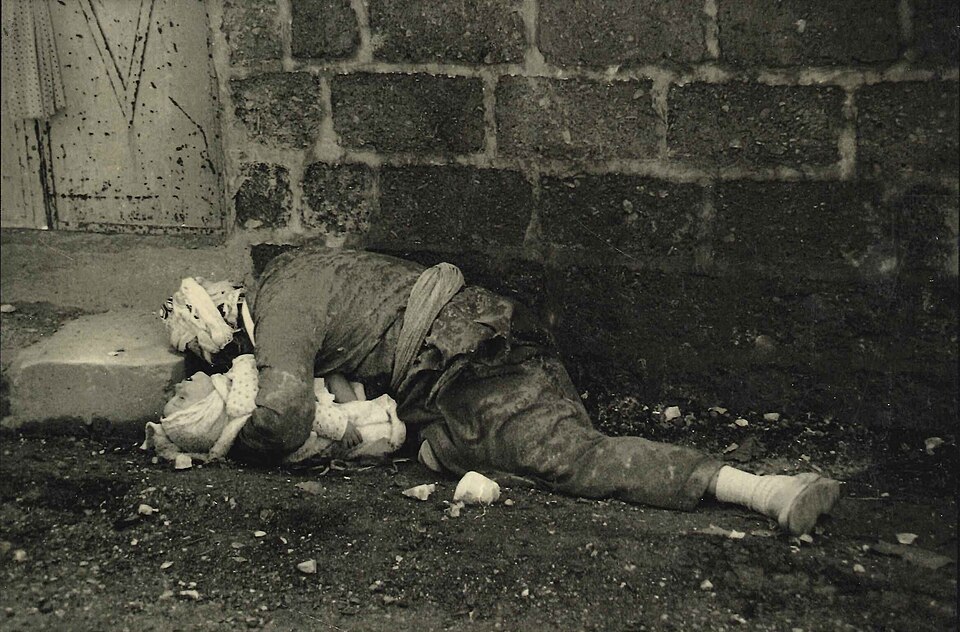
Thousands of civilians killed when Iraqi forces used chemical weapons against Halabja.
Background
A town caught in the Iran–Iraq War
Iranian forces and Kurdish fighters had taken Halabja shortly before the attack. Iraqi forces then struck the town, whose civilian population included families unable to flee the fighting.[1]
What happened
- 16 March 1988
Chemical bombardment
Aircraft delivered chemical agents alongside conventional attacks. Toxic exposure killed people in homes and streets and overwhelmed attempts to escape or assist others. The attack became one of the most extensively documented uses of chemical weapons against civilians.[1]
Impact & evidence
Immediate deaths and surviving injuries
Human Rights Watch described up to 5,000 civilian deaths. This estimate concerns the attack’s immediate fatalities; later illness and disability added to the human impact. Survivors also experienced displacement, bereavement and continuing uncertainty about health consequences.[2]
Aftermath & legacy
Accountability and memorialisation
Halabja became a central symbol of Kurdish suffering under Saddam Hussein’s government. Later criminal proceedings and remembrance addressed responsibility, while medical and social support remained essential for survivors. The attack and the wider Anfal campaign remain closely connected in public remembrance.[1]
Sources & image credits (2)
Mehdi Jamshidi · Public domain Image source ↗