The Haitian Revolution
Overthrowing plantation slavery and founding an independent Black republic.
- When
- 1791–1804
- Where
- Saint-Domingue, later Haiti
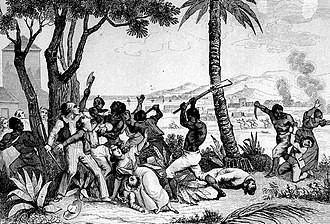
The revolution in Saint-Domingue transformed an exceptionally profitable slave colony into independent Haiti. Enslaved people's struggle intersected with demands for racial equality, imperial warfare and the upheavals of the French Revolution.
Background
Plantation wealth and coercion
The colony's prosperity rested on enslaved labour. Its racial hierarchy and conflicts over freedom made revolutionary change a struggle over who could claim rights.[1]
Freedom confronted a plantation empire
The 1791 uprising challenged the enslaved labour on which the French colony of Saint-Domingue depended. The conflict developed through shifting alliances and imperial intervention, culminating in independence in 1804. Its success alarmed slaveholding societies elsewhere. The United States’ changing response illustrates that international reactions were shaped by slavery and strategic interests, rather than a consistent commitment to the insurgents’ freedom.[2]
What happened
Impact & evidence
Revolutionary leadership
The histories of Toussaint Louverture and Jean-Jacques Dessalines illuminate different stages of the struggle, without replacing the role of collective action.[1]
Aftermath & legacy
Freedom with international consequences
Haiti challenged the Atlantic system of racial slavery. Independence did not end external hostility, and its achievement should not be reduced to a footnote in the French Revolution.[1]
Sources & image credits (2)
- Smithsonian Associates — Haitian Revolution and its legacy ↗
- history.state.gov — historical account ↗
Aaron Martinet / Alphonse-Charles Masson; Public domain; via Wikimedia Commons. Image source ↗