Gwangju uprising and military repression
Military violence against protesters prompted a city-wide uprising and left a lasting movement for truth and democracy.
- When
- 18–27 May 1980
- Where
- Gwangju, South Korea
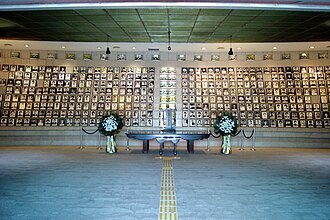
Military violence against protesters prompted a city-wide uprising and left a lasting movement for truth and democracy.
Background
A military takeover contested
After President Park Chung-hee's assassination in 1979, hopes for political reform faced renewed military control. Chun Doo-hwan's faction expanded martial law, closed universities and detained opponents. Students protesting in Gwangju confronted troops on 18 May 1980.[1]
What happened
- 18–21 May
Violence drew the city into resistance
Beatings, shootings and arrests turned a student protest into a wider urban uprising. Residents organised medical care, transport and support. Some acquired weapons as soldiers withdrew from central Gwangju. The mobilisation cannot be reduced either to a single peaceful march or to the military's portrayal of an illegitimate riot.[2]
- 27 May
The final assault
Troops retook the provincial government complex and ended the organised resistance. Survivors faced detention, interrogation and a state-controlled account of what had happened. The military victory did not settle questions about responsibility for firing on civilians.[2]
Impact & evidence
166 civilian deaths in the archive's account
The May 18 Archives records 166 civilian deaths during the ten-day uprising and approximately 5,000 people injured or detained. The latter figure combines different harms and is not a death toll. Other commemorative totals can include later deaths, missing people or different recognition criteria.[2]
Aftermath & legacy
Records preserved against denial
Citizens' statements, photographs, hospital records and official documents formed an archive later recognised by UNESCO. Their preservation helped challenge censorship and support demands for accountability. Gwangju became a central reference point in South Korea's democracy movement, while families continued seeking a fuller record of the violence.[3]
Sources & image credits (3)
- Wikipedia — Gwangju Uprising ↗
- May 18 Archives: account of the uprising ↗
- UNESCO: nomination of the May 18 documentary archive ↗
Schlarpi Image source ↗