Gödel's incompleteness theorems
Gödel proved limits on what sufficiently strong, effectively specified formal systems can establish about arithmetic and themselves.
- When
- 1931
- Where
- Vienna and the foundations of mathematics
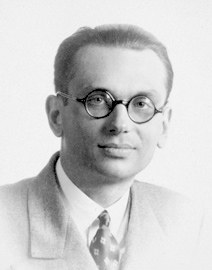
Gödel proved limits on what sufficiently strong, effectively specified formal systems can establish about arithmetic and themselves.
Background
The ambition to formalise mathematics
Early twentieth-century foundational programmes sought precise axioms and proofs that mathematical reasoning was secure. Formalisation promised to replace intuition with rules whose consequences could be systematically checked. Gödel investigated the limits of that ambition from within mathematical logic.[1]
What happened
- 1930–1931
Announcement and publication
Gödel announced an incompleteness result in 1930 and published his theorems in 1931. By encoding statements and proofs as numbers, he made arithmetic express claims about formal provability itself. The argument used exact constructions, not merely a verbal paradox.[1]
Impact & evidence
The qualifications matter
A consistent, effectively axiomatised system strong enough for arithmetic cannot decide every arithmetic statement. Under the standard conditions, it also cannot prove its own consistency. Weak systems and systems outside these assumptions are not covered by the same claim.[2]
Aftermath & legacy
Limits are not the collapse of reason
The results reshaped logic and foundational research. They do not establish that every opinion is equally valid, that nothing can be proved, or that science is impossible. Their force comes from stating precisely what particular formal systems cannot accomplish, while leaving vast areas of rigorous proof intact.[3]