Women's suffrage in Finland
Women gaining equal voting and candidacy rights and entering parliament.
- When
- 1906–1907
- Where
- Grand Duchy of Finland
Women gaining equal voting and candidacy rights and entering parliament. Finland was an autonomous grand duchy within the Russian Empire. Its old estate-based Diet represented a limited share of the population.
Background
A restricted system under imperial rule
Finland was an autonomous grand duchy within the Russian Empire. Its old estate-based Diet represented a limited share of the population. Social mobilisation and the crisis of 1905 created pressure for a more representative institution, linking gender equality to a wider struggle over political participation.[1]
What happened
- 1906
A unicameral parliament created
Reform replaced the old Diet with a single-chamber parliament elected through universal and equal suffrage. Women gained the right both to vote and to stand for election. Those are distinct rights, and Finland's significance includes the combination rather than voting alone.[2]
- 1907
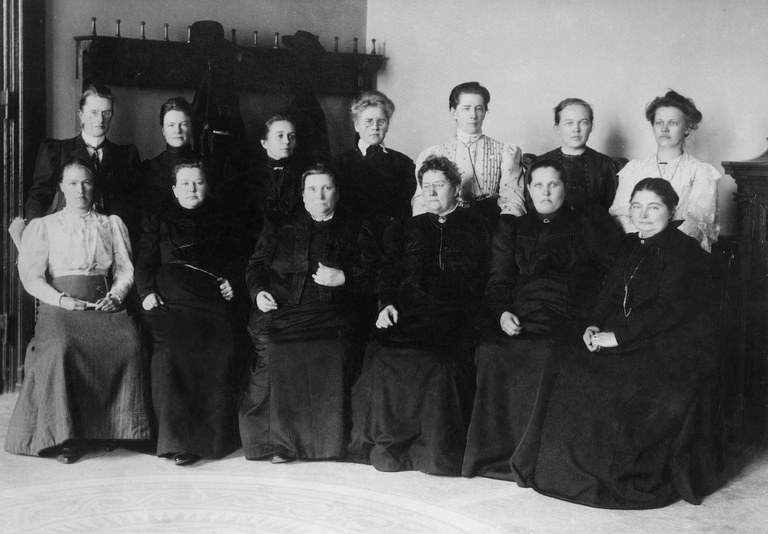
Nineteen women elected
The first election under the new system returned nineteen women to parliament. Their entry turned eligibility into actual representation. Women from different political backgrounds brought varied priorities, making parliamentary participation more than a symbolic demonstration of one shared position.[2]
Impact & evidence
Democracy remained constrained
Finland did not become independent until 1917. Imperial authority could still restrict political life, so the 1906 reform did not settle every question of sovereignty or parliamentary power. Equal electoral rights were nevertheless a substantial break with the previous exclusions.[2]
Aftermath & legacy
Representation required continuing work
Finland's example showed that women could enter a national legislature as elected representatives, not merely receive promises of future inclusion. The milestone belongs within a broader history of workers' organising, women's movements and constitutional change. It did not remove all gender inequalities outside parliament.[1]
Sources & image credits (2)
- Wikipedia — Women's suffrage in Finland ↗
- Finland's official country information — Parliamentary gender equality ↗
Photographer unidentified · CC BY 4.0 (source record). Resized for display. Image source ↗