Development of calculus
Differentiation and integration became a connected method for studying change, motion and accumulation.
- When
- Seventeenth century, with earlier foundations
- Where
- Europe and a wider mathematical inheritance
Differentiation and integration became a connected method for studying change, motion and accumulation.
Background
Longstanding problems of curves and motion
Mathematicians had developed methods for areas, tangents and infinite series long before a general calculus emerged. Greek geometry and later work in several mathematical traditions supplied important foundations. Earlier achievements, including those of the Kerala school, should be recognised without assuming an undocumented route of transmission to every later European result.[1]
What happened
- 1660s–1680s
Newton and Leibniz develop general methods
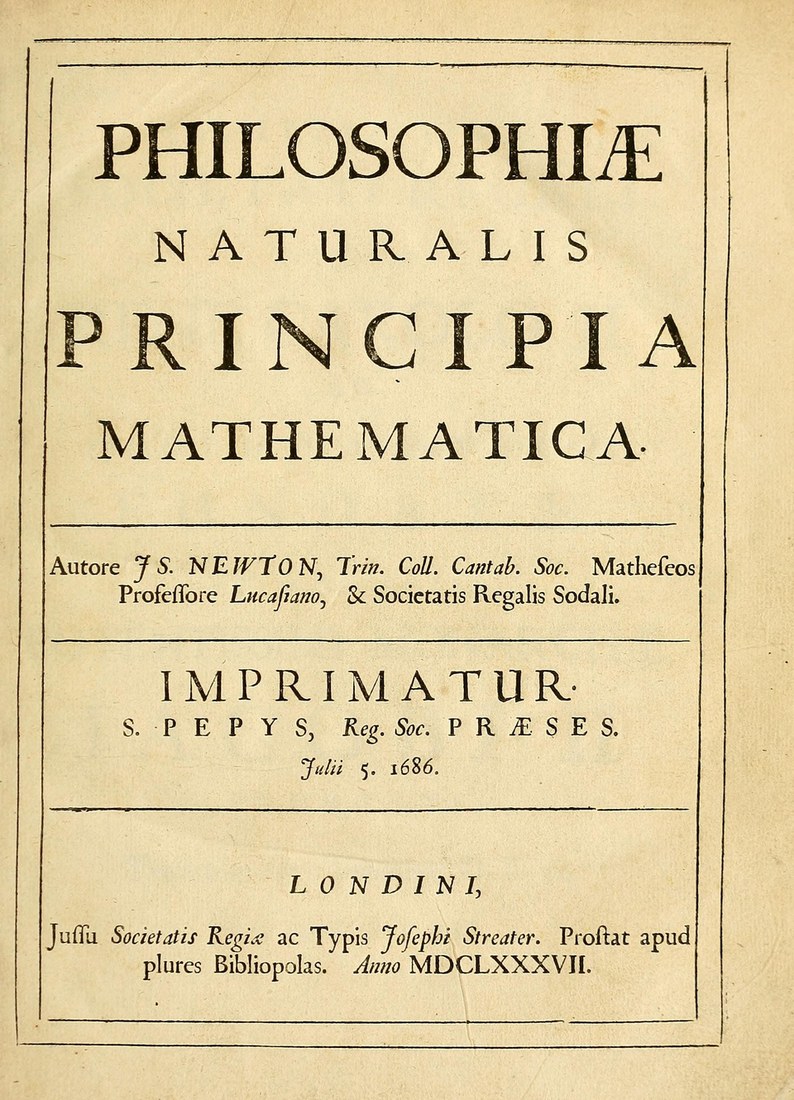
Isaac Newton connected changing quantities with his method of fluxions. Gottfried Wilhelm Leibniz independently developed differential and integral methods and published influential notation. Their approaches made the relationship between rates of change and accumulated quantities a practical tool for solving broad classes of problems.[2]
Impact & evidence
The fundamental theorem
The relationship between differentiation and integration explains why an area problem can be solved through a function's rate of change. This connection gave calculus a reach beyond separate clever techniques. Its notation and methods made calculations easier to communicate and extend.[2]
Aftermath & legacy
From disputed priority to rigorous analysis
The bitter Newton–Leibniz priority dispute obscured their shared dependence on earlier mathematics. Later generations clarified limits and foundations and expanded calculus into analysis. The achievement was therefore both a seventeenth-century breakthrough and a continuing collective construction, with consequences across physics, engineering and economics.[1]
Sources & image credits (2)
Isaac Newton / 1687 edition, via Wikimedia Commons Image source ↗