CRISPR-Cas9 genome editing
Turning a bacterial defence mechanism into a programmable tool for editing DNA.
- When
- 2012 and subsequent development
- Where
- International molecular biology
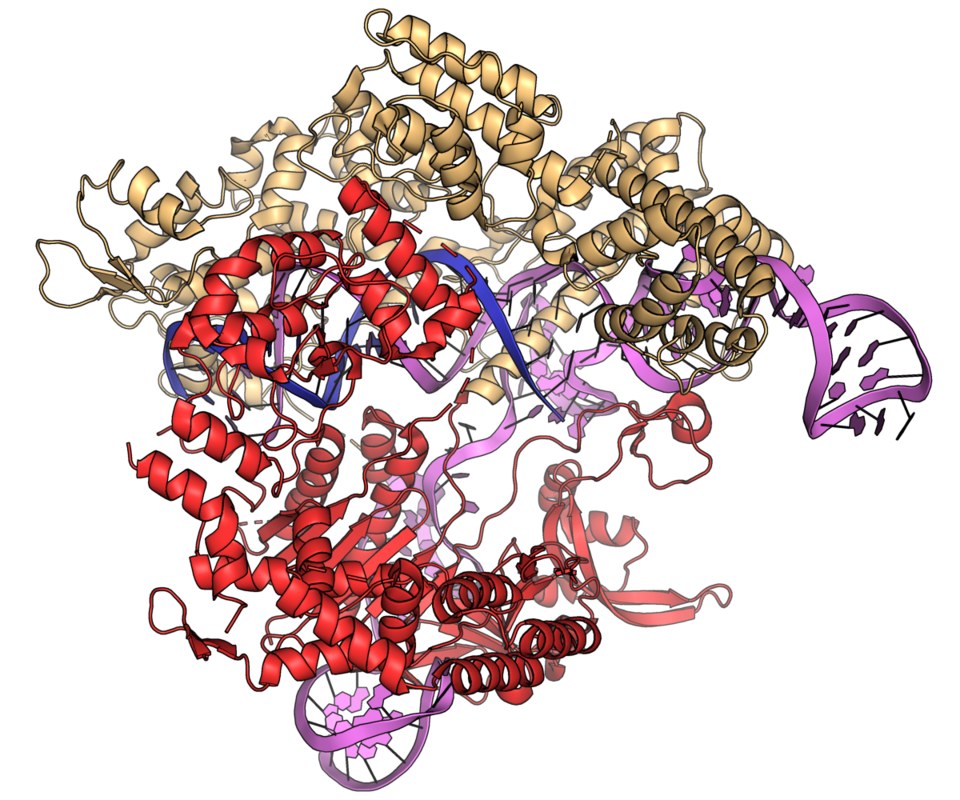
Turning a bacterial defence mechanism into a programmable tool for editing DNA. Research into repeated DNA sequences revealed a microbial defence system that could recognise invading genetic material. This work involved many laboratories before CRISPR became an editing technology.
Background
Bacteria preserve evidence of infection
Research into repeated DNA sequences revealed a microbial defence system that could recognise invading genetic material. This work involved many laboratories before CRISPR became an editing technology. The system's biological function supplied the starting point for engineering a tool, rather than being invented solely for human medicine.[1]
What happened
- 2012
A programmable cutting system
Emmanuelle Charpentier, Jennifer Doudna and colleagues demonstrated how Cas9 could be guided by RNA to cut a chosen DNA sequence. Changing the guide allowed the system to target different sites. This made molecular targeting more flexible than approaches requiring a newly engineered protein for each sequence.[1]
- 2013 onward
Editing within cells
Other groups demonstrated applications in living cells, including mammalian cells. Researchers used the resulting DNA breaks and cellular repair processes to disrupt or alter sequences. The ability to cut at a target did not guarantee an exact desired outcome; delivery, repair and unintended changes remained practical challenges.[1]
Impact & evidence
Power does not remove limits
CRISPR transformed experiments that test gene function and accelerated biotechnology development. Its clinical applications require evidence for specific diseases and procedures; the technology is not a universal cure. Heritable human editing also raises questions distinct from laboratory research or treatment of an individual patient's cells.[1]
Aftermath & legacy
Discovery, engineering and responsibility
The breakthrough depended on basic microbial research, biochemical reconstruction and later technical refinement. Recognising that sequence avoids reducing a collective field to one announcement. Its history also shows why scientific capability and permission to use it are separate decisions.[1]
Sources & image credits (2)
Deposition authors: Nishimasu, H., Ishitani, R., Nureki, O.; Visualization author: Synpath · CC0 (source record). Resized for display. Image source ↗