Coffee slavery in Brazil's Paraíba Valley
Coffee exports expanded through enslaved labour and a plantation landscape designed to control workers.
- When
- Nineteenth century–1888
- Where
- Paraíba Valley, Brazil
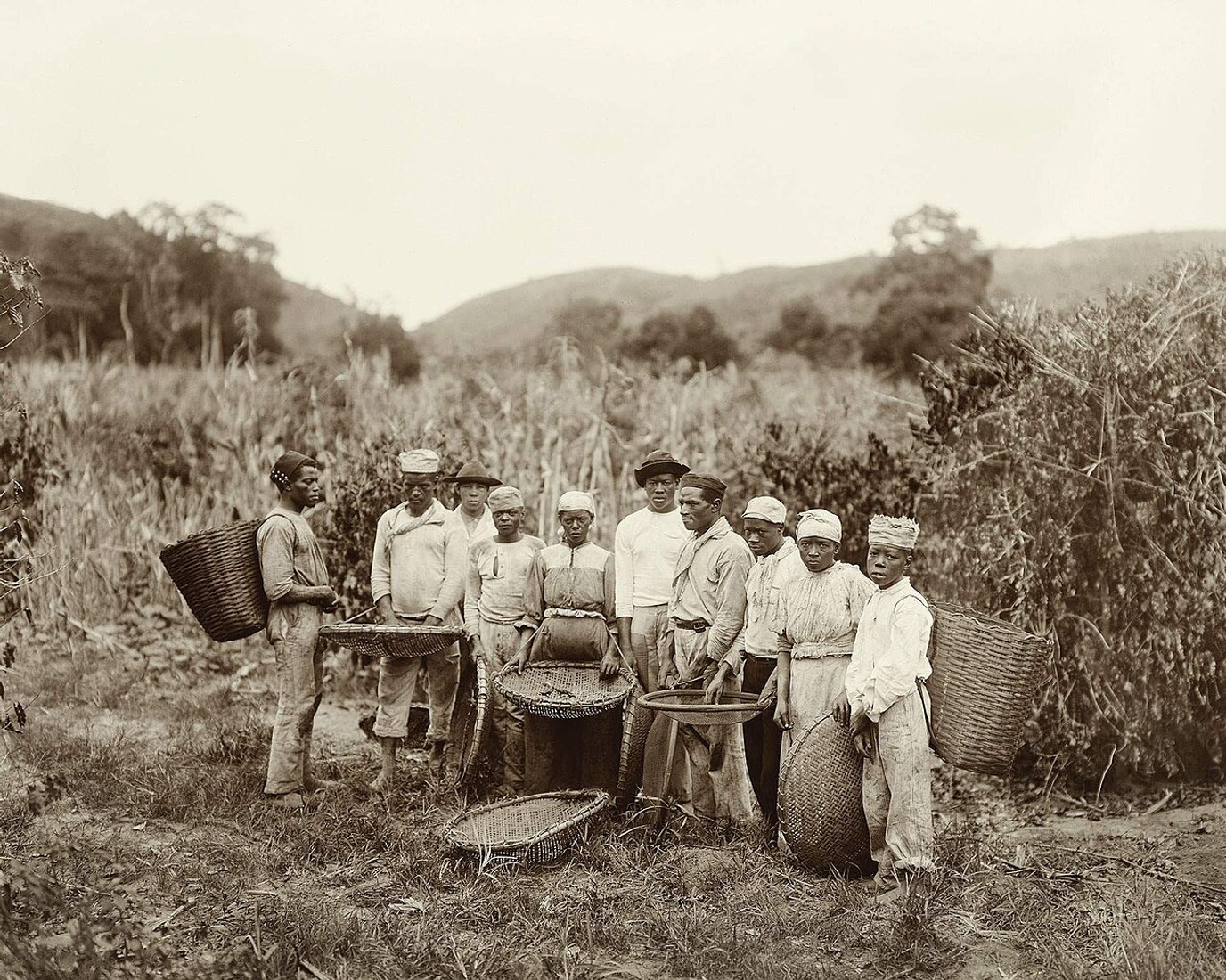
Coffee exports expanded through enslaved labour and a plantation landscape designed to control workers.
Background
An expanding export frontier
Coffee production in the Paraíba Valley linked estates between Rio de Janeiro and São Paulo to growing international consumption. Forest clearance and plantation expansion transformed the landscape. Brazil's independence did not end slavery: the imperial economy continued to depend on it.[1]
What happened
- 1850 onward
The internal slave trade intensified
The suppression of Atlantic trafficking in 1850 did not free those already enslaved. Planters drew on internal sales to sustain coffee production. People were moved between regions and families faced separation as labour was redirected toward profitable export districts.[1]
Impact & evidence
Space used to organise coercion
Research on the valley's landscape examines how the arrangement of fields and buildings supported labour management. Agricultural productivity and control over people developed together. Machinery that saved work in one task could enable enslavers to expand cultivation rather than reduce the total demands on enslaved workers.[2]
Domestic labour and family relationships
Enslavement also operated inside plantation households. Domestic work, gender and family relationships formed part of the estate economy, not an exception outside it. An account limited to harvesting misses this wider control over everyday life.[3]
Aftermath & legacy
Abolition and enduring inequality
Slavery ended legally in Brazil in 1888 after resistance and a broad abolitionist struggle. Legal freedom did not automatically redistribute land or the wealth accumulated by plantation owners. The valley's surviving estates therefore preserve both architectural heritage and evidence of a deeply unequal social order.[1]