Chinese New Culture Movement
New Culture thinkers challenged inherited authority and promoted new forms of language, knowledge and social life.
- When
- 1910s–1920s
- Where
- China, especially Shanghai and Beijing
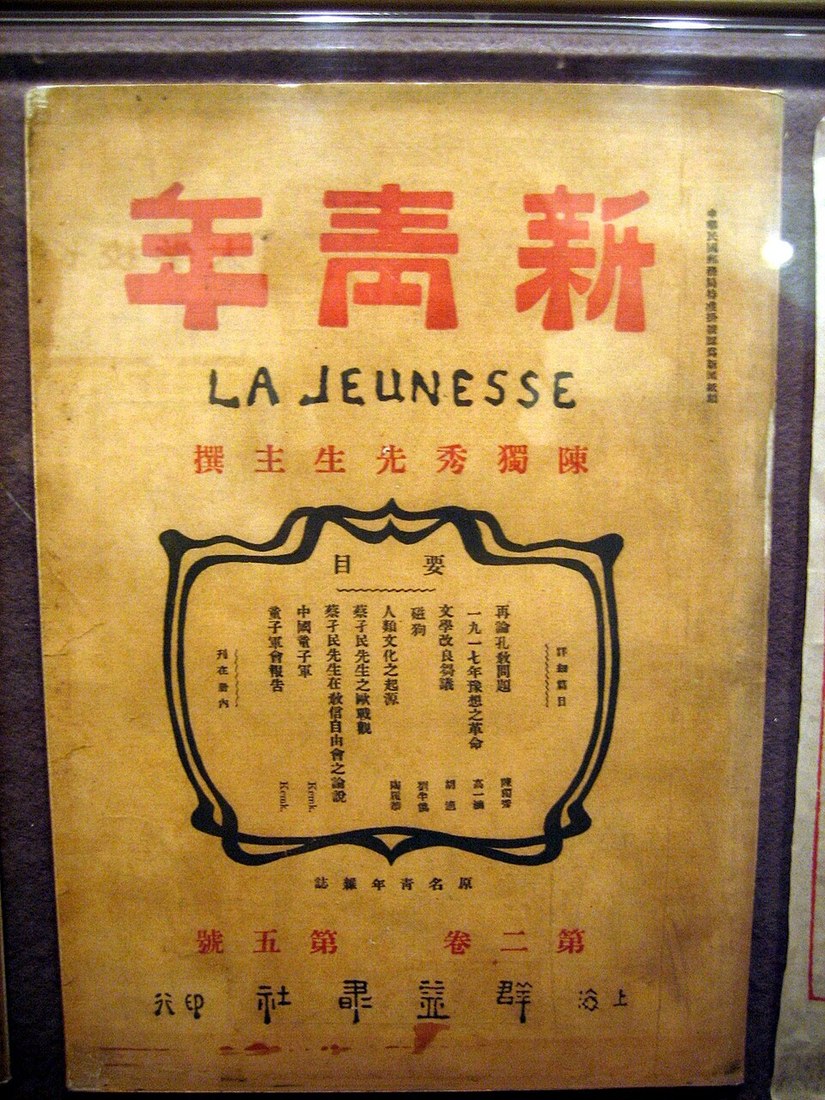
New Culture thinkers challenged inherited authority and promoted new forms of language, knowledge and social life.
Background
Republican disappointment
The fall of the Qing dynasty did not resolve foreign domination, political fragmentation or social inequality. Intellectuals asked whether institutional change required a deeper transformation of culture and everyday values. Their answers were varied and often sharply contested.[1]
What happened
- 1915 onward
New Youth becomes a forum
Chen Duxiu's journal encouraged criticism of inherited hierarchies and calls for science, independence and renewal. Universities and publishing networks helped spread debate. Contributors did not constitute a single party or agree on a complete programme for China's future.[3]
- 1919 and after
Overlap with May Fourth
The May Fourth protests connected intellectual debate with anti-imperialist mobilisation. The movements overlap but are not identical: New Culture had begun earlier and extended into broader literary and social questions.[1]
Impact & evidence
Changing how people wrote and thought
Critiques of Confucian authority were linked to arguments about family, gender and individual freedom. Advocates of vernacular writing sought to make literature and public discussion less dependent on classical forms. These projects altered who could participate in modern literary culture.[2]
Aftermath & legacy
Multiple political futures
Some participants moved toward Marxism, others toward liberal or different reform programmes. Later histories often cast the movement as a straight road to one outcome. Its importance is better understood through the range of possibilities debated and the lasting changes in education, literature and social criticism.[1]
Sources & image credits (3)
- Wikipedia — New Culture Movement ↗
- Columbia University: Chen Duxiu's Our Final Awakening, 1916 ↗
- Academy of Chinese Studies: the rise of the movement ↗
No machine-readable author provided. Mountain assumed (based on copyright claims). Image source ↗