Cambodian genocide
Khmer Rouge rule causing mass death through execution, forced labour, starvation and persecution.
- When
- 1975–1979
- Where
- Cambodia
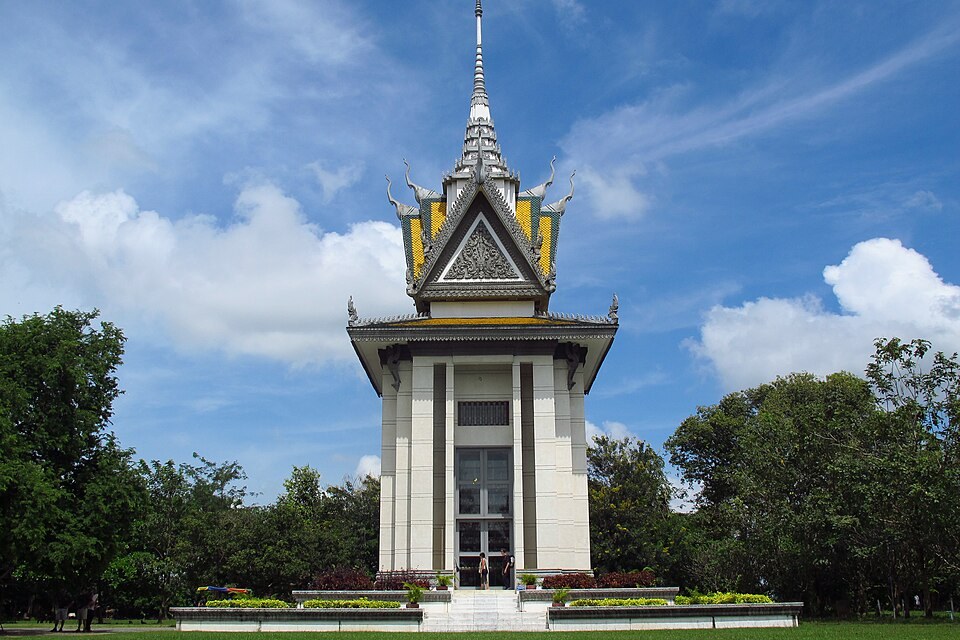
Khmer Rouge rule causing mass death through execution, forced labour, starvation and persecution. The Khmer Rouge entered Phnom Penh in April 1975 after years of civil war and extensive destruction. Its leaders sought a radically transformed agrarian society.
Background
Revolution after civil war
The Khmer Rouge entered Phnom Penh in April 1975 after years of civil war and extensive destruction. Its leaders sought a radically transformed agrarian society. They treated many forms of urban life, religion, education and independent association as obstacles, and placed the population under highly coercive control.[1]
What happened
- 1975
Cities emptied and families reorganised
Residents were forced from cities into the countryside. Money and many existing institutions were abolished, and people were assigned to collective work. Families were separated and movements restricted. The regime's demands for production operated alongside inadequate food and medical care, making everyday survival dependent on authorities who could label failure or dissent a political offence.[1]
- 1975–1979
Purges and targeted persecution
Security centres imprisoned, tortured and killed suspected enemies, including members of the regime itself. Cham Muslims and ethnic Vietnamese faced distinct campaigns of persecution. The Vietnamese invasion ended Khmer Rouge government in Phnom Penh in January 1979, though the movement continued fighting afterward.[1]
Impact & evidence
Several mechanisms of killing
Estimates differ, but demographic reconstructions place the toll at roughly 1.5–2 million people, around a fifth to a quarter of the population. Execution was one cause alongside starvation, disease and exhausting labour. The total should not be described as the number killed at one prison or in a single series of executions.[2]
Aftermath & legacy
Documentation and differentiated legal findings
Survivor testimony, prison documents and demographic work supported later prosecutions. The Extraordinary Chambers addressed genocide against particular targeted groups as well as crimes against humanity affecting the wider population. This distinction explains why a familiar historical label and the precise scope of individual legal convictions are not always identical.[1]
Sources & image credits (2)
Timgray200 · CC BY-SA 3.0 (source record). Resized for display. Image source ↗