French conquest of Algeria
The military conquest that established French rule through dispossession and destructive warfare.
- When
- 1830–1847, with later campaigns and resistance
- Where
- Algeria
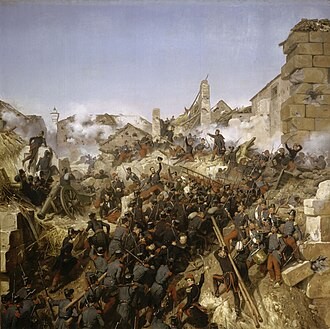
France captured Algiers in 1830 and pursued further conquest against Algerian resistance. Under commanders including Thomas-Robert Bugeaud, mobile campaigns, raids and extreme violence became instruments of domination. Abd el-Kader's surrender in 1847 marked a major turning point, not the end of all resistance.
Background
From expedition to occupation
The seizure of Algiers was followed by expanding territorial ambitions. The conquest developed into colonisation, rather than ending with the defeat of the city's ruler.[1]
Conquest continued beyond the capital
The fall of Algiers did not mean that France controlled Algeria. Abd el-Kader’s resistance and other local forces contested French expansion, while commanders sought to secure routes, territory and supplies. Treaties and military offensives alternated; the growing commitment to permanent settlement made control over the countryside central to the conflict.[2]
What happened
- 1830–1837
Cities fall
French forces took Algiers in 1830 and Constantine in 1837. These victories formed part of a wider struggle to control territory beyond the coastal cities.[2]
- 1839–1840s
War against Abd el-Kader
France broke the Treaty of Tafna by crossing the Iron Gates. Under Bugeaud, repeated marches and mobile columns sought to force communities into submission.[2]
- 1847–1848
Surrender and incorporation
Abd el-Kader surrendered in 1847. France's annexation and departmental organisation in 1848 consolidated a new political order while colonial expansion continued.[1]
Impact & evidence
Raids and suffocation
The French Army Museum identifies razzias and enfumades among the conquest's atrocities. These methods extended warfare into communities and places where people sought refuge.[2]
Collective punishment of communities
Razzias attacked settlements and resources; enfumades used smoke against people sheltering in caves. These methods made civilian refuge and subsistence targets of military coercion. They also explain why conquest cannot be understood solely through the dates on which cities fell or commanders surrendered. The cited museum histories document these practices without establishing one comprehensive death toll for the conquest.[2]
Aftermath & legacy
Conquest remembered through its objects
Weapons, banners and other objects entered French collections through military seizure. Studying their provenance reveals how conquest also displaced cultural property and shaped the archive of the war.[1]
Sources & image credits (2)
- French Army Museum — Collections from the first conquest, 1830–1847 ↗
- French Army Museum — La conquête absolue de l'Algérie ↗
Horace Vernet; Public domain; via Wikimedia Commons. Image source ↗